Gridly
Overview
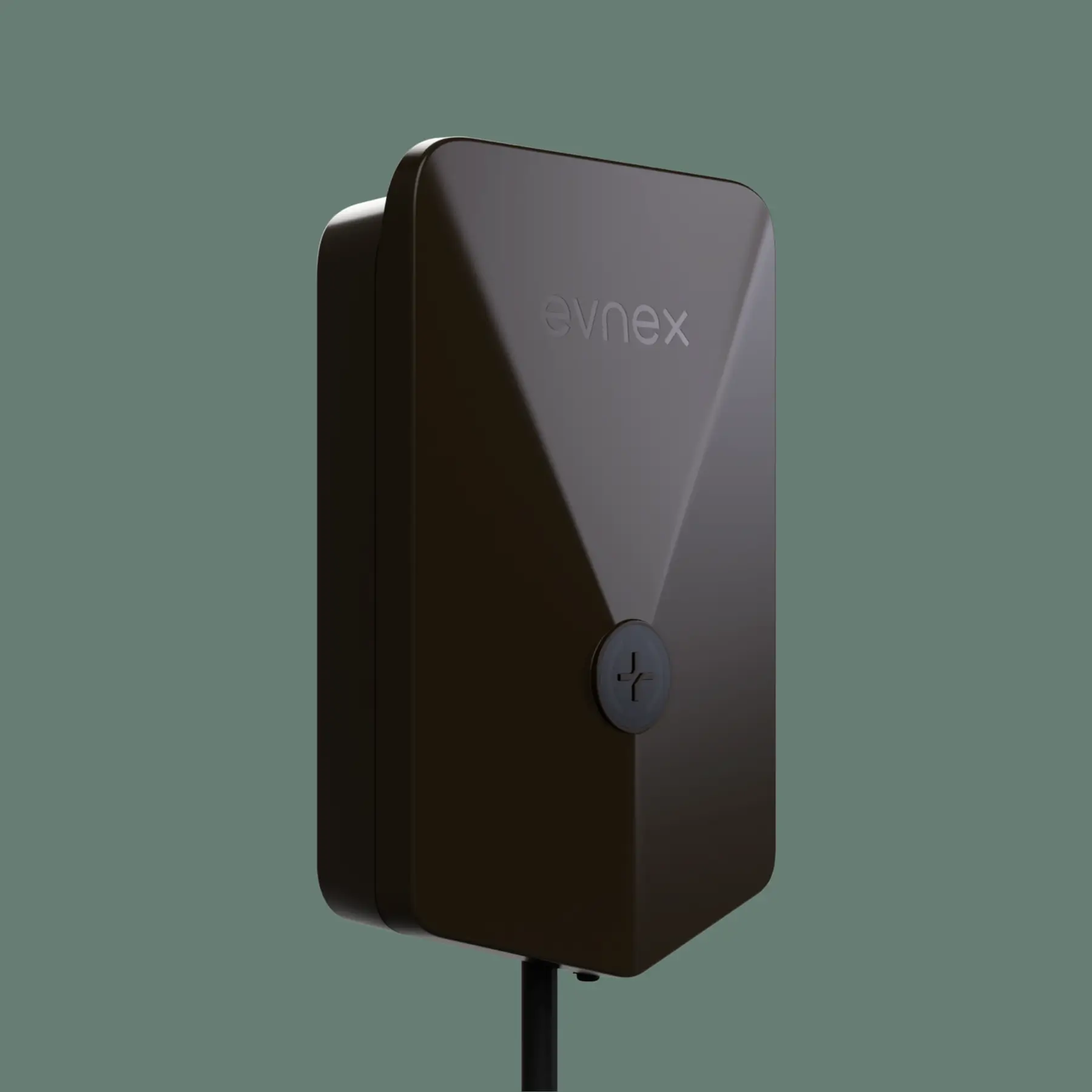
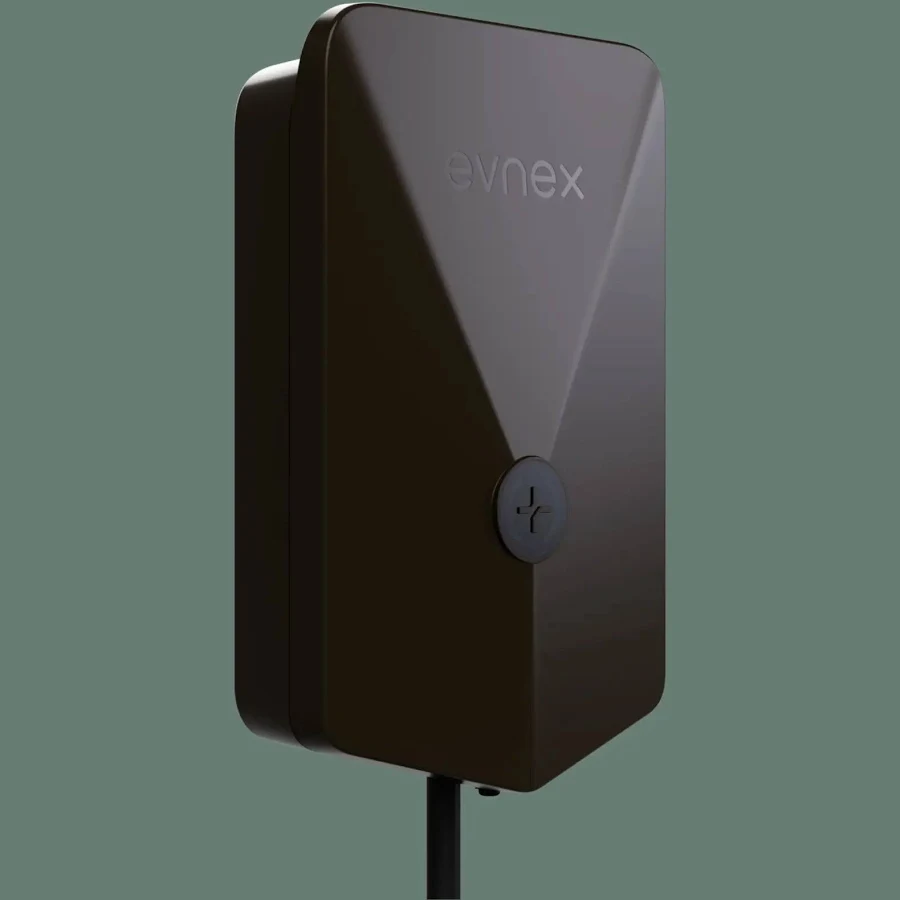
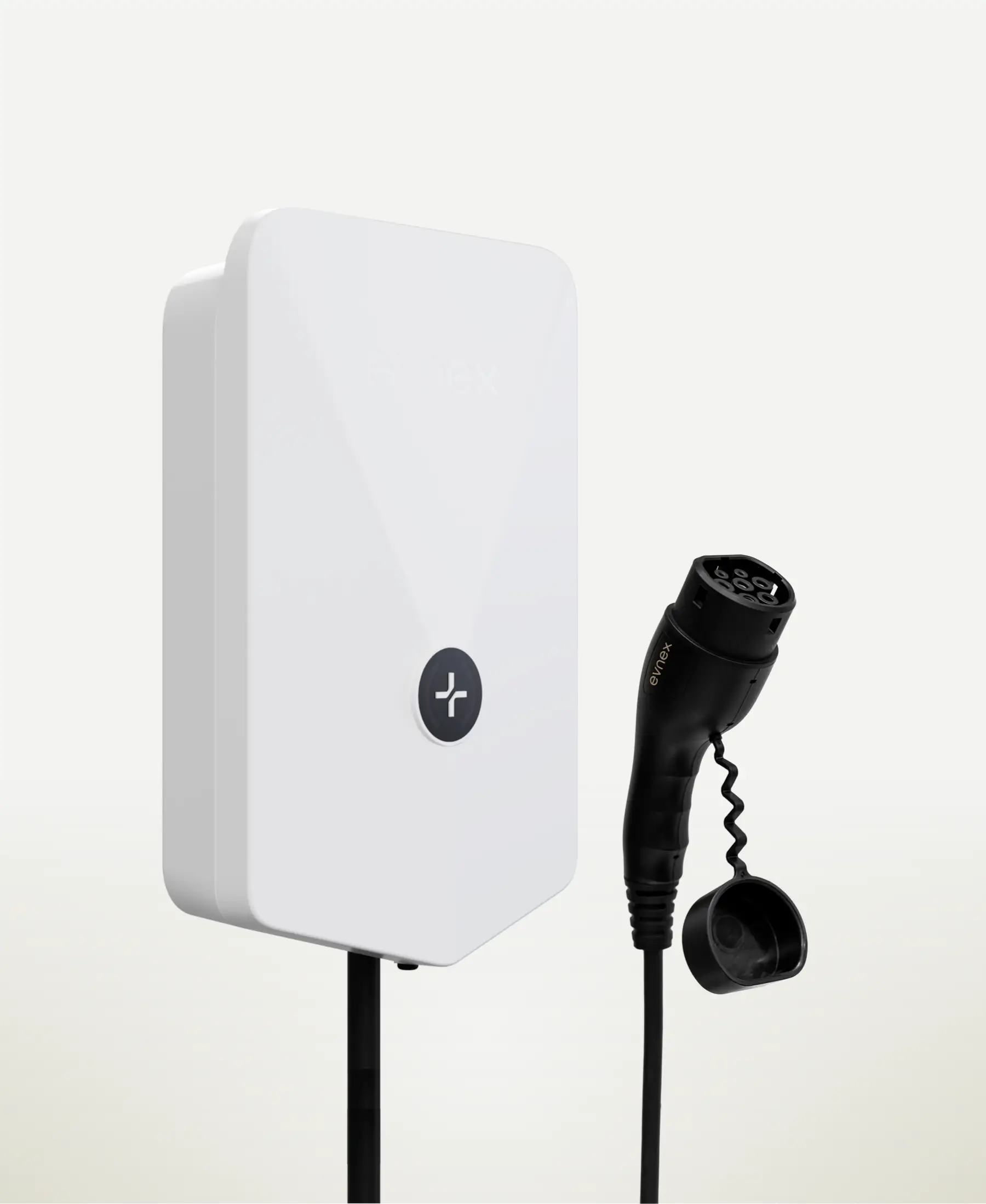
The Evnex E2 Plus is the flagship of Evnex’s E2 range - adding CT clamp solar integration to the E2 Core’s OCPP, load management, 6m tethered cable, and 4-year warranty foundation. At $1,299, it is cheaper than the myenergi Zappi 7kW ($1,350) while offering more features.
For solar households who want to charge from surplus generation rather than paying grid rates or exporting at low feed-in tariffs, the E2 Plus is the most feature-complete sub-$1,400 option in the Australian market.
Total installed cost
| Cost component | Typical range |
|---|---|
| E2 Plus supply | $1,299 |
| Licensed electrician installation + CT clamp | $450–$750 |
| Total all-in | ~$1,750–$2,050 |
Compared to key solar charger alternatives:
- myenergi Zappi installed: ~$2,000–$2,500
- Fronius Wattpilot 22kW installed: ~$2,500–$3,200 (3-phase capable)
- ABB Terra AC 22kW installed: ~$2,800–$3,500 (3-phase capable)
The E2 Plus is the most affordable solar-capable smart charger installation available in Australia by a meaningful margin.
How the solar integration works
The E2 Plus monitors your home’s energy flow via a CT (current transformer) clamp installed at the main switchboard. This is an inverter-agnostic approach - it reads whole-home import and export data at the source, meaning it works with any grid-connect inverter: SolarEdge, Fronius, Sungrow, GoodWe, SMA, Enphase, or anything else.
When the CT clamp detects surplus generation being exported to the grid, the charger increases its output to absorb that surplus into the car instead. When solar production drops - clouds pass, afternoon shade begins - the charger reduces output proportionally. The adjustment is continuous and automatic.
Why this matters financially:
A typical 6.6kW solar system exporting 8–12 kWh per day at a 5–8 cents/kWh feed-in tariff earns $0.40–$0.96 per day in export revenue. The same energy used to charge an EV at home replaces grid electricity at 28–40 cents/kWh - a value of $2.24–$4.80 per day. Capturing that surplus into the car rather than exporting it is worth $1.84–$3.84 per day in avoided grid charging, or roughly $670–$1,400 per year for a household with moderate solar and regular EV use.
The solar integration pays back its $300 premium over the E2 Core in 3–5 months for households with existing solar panels.
E2 Plus vs myenergi Zappi: the key comparison
For solar households, this is the primary comparison.
| Evnex E2 Plus | myenergi Zappi 7kW | |
|---|---|---|
| Price (supply) | $1,299 | $1,350 |
| Solar diversion | Yes (CT clamp) | Yes (CT clamp) |
| OCPP | Yes (closed 1.6) | No (proprietary) |
| Load management | Yes | Partial (via CT clamp data) |
| Warranty | 4 years | 3 years |
| Inverter compatibility | Any | Any |
| Australian field history | New (2025–) | Established |
| Cable | 6m tethered | 6.5m tethered |
Choose the E2 Plus if:
- You want OCPP alongside solar diversion (the Zappi cannot do both)
- You want load management as a dedicated feature
- Warranty length matters (4 vs 3 years)
- Budget is tight - $51 cheaper at supply price
Choose the Zappi if:
- You specifically want the most battle-tested solar diversion implementation in Australia
- You already use the myenergi ecosystem (Eddi, Libbi) and want native integration
- Fine-grained Eco/Eco+ mode configuration is a priority and OCPP is irrelevant to you
For most new buyers starting fresh, the E2 Plus has a stronger overall specification at a lower price. The Zappi’s advantage is track record, not features.
OCPP on the E2 Plus
OCPP 1.6 on the E2 Plus enables:
- Scheduled charging - set departure time targets, charge windows, and off-peak tariff optimisation via the Evnex app
- Solar-aware scheduling - configure hybrid mode: charge from solar when available, supplement from grid to meet a departure target
- Remote session management - start, stop, and monitor from anywhere
- Energy reporting - monthly session history, cost estimates, and kWh totals
The OCPP implementation is closed - the E2 Plus communicates with Evnex’s own cloud, not with third-party OCPP backends like Home Assistant or fleet management platforms. For the residential user, this is not a practical constraint. For commercial installs or users with home automation requirements, the Wallbox Pulsar Plus or Delta AC Max offer open OCPP as an alternative (though neither has solar diversion).
Load management
The E2 Plus includes the same load management as the E2 Core and Flex: a CT clamp at the switchboard monitors total home current draw and reduces charger output before the main fuse is tripped. The E2 Plus effectively uses the solar monitoring CT clamp for double duty - monitoring both solar generation and total home load from a single installation.
This simplifies installation and avoids the need for a second CT clamp in most configurations.
E2 Plus vs the full E2 range
| E2 Flex | E2 Core | E2 Plus | |
|---|---|---|---|
| Price | $799 | $999 | $1,299 |
| Cable | Socket only | 6m tethered | 6m tethered |
| Solar integration | No | No | Yes (CT clamp) |
| OCPP | 1.6 (closed) | 1.6 (closed) | 1.6 (closed) |
| Load management | Yes | Yes | Yes |
| Warranty | 4 years | 4 years | 4 years |
The upgrade path is clear: the E2 Plus is the right choice specifically for solar households. For non-solar households, the E2 Core saves $300 with no practical loss.
Who should buy the E2 Plus
Best for:
- Solar households who want to charge from surplus generation rather than exporting at low feed-in tariffs
- Buyers who want OCPP alongside solar integration (rules out the Zappi)
- Anyone wanting the most cost-effective solar-capable smart charger installation in Australia
- Buyers on time-of-use tariffs who also want solar diversion - the E2 Plus handles both via the same app
Skip if:
- You don’t have solar panels - the E2 Core is $300 less with identical non-solar features
- You need open OCPP interoperability with third-party platforms
- You have 3-phase supply and want faster than 7.4kW AC charging - the Fronius Wattpilot 22kW or Zappi 22kW support 3-phase with solar integration
For a full comparison of the E2 range and Evnex’s position in the Australian charger market, see our Evnex charger overview and brand guide.