Gridly
Overview
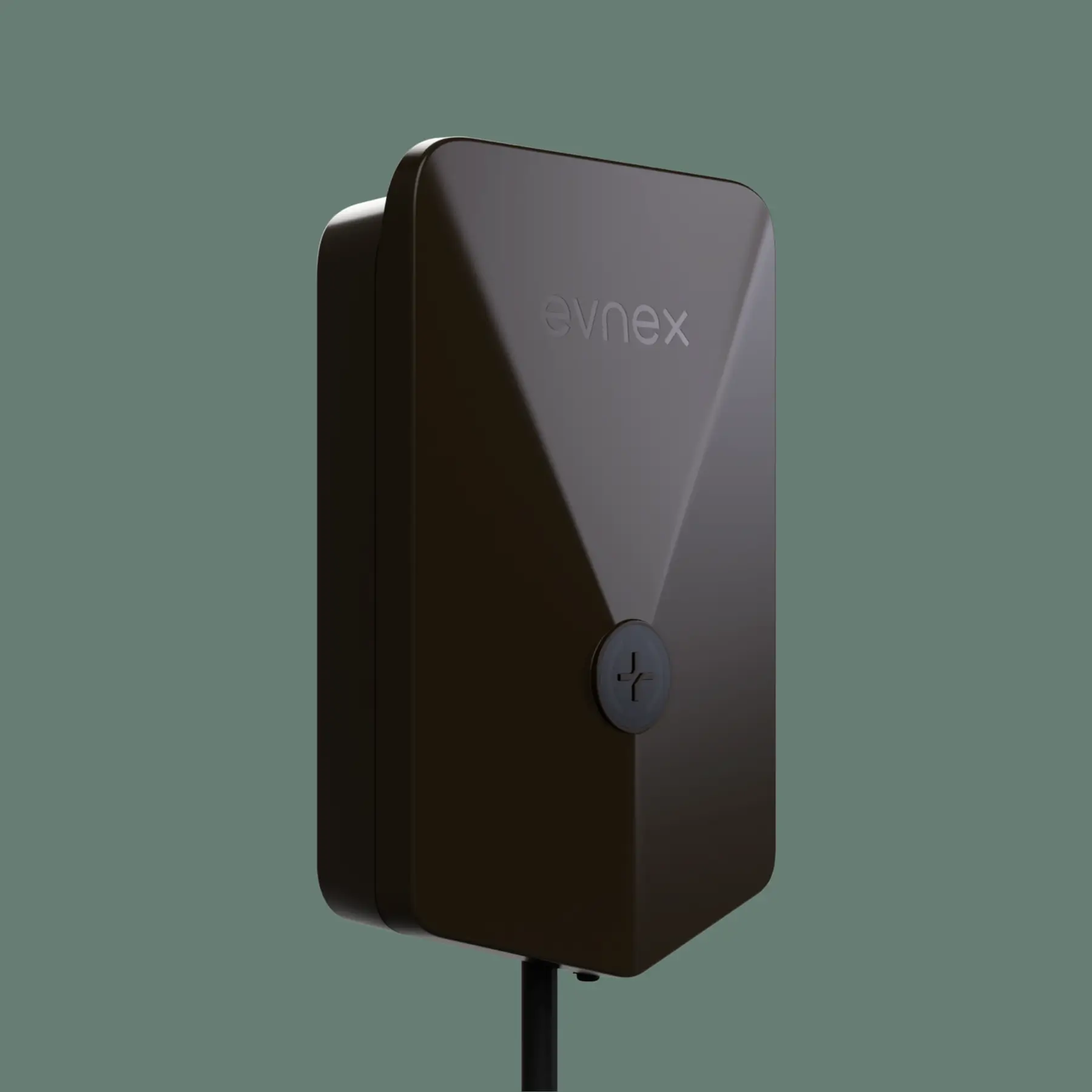
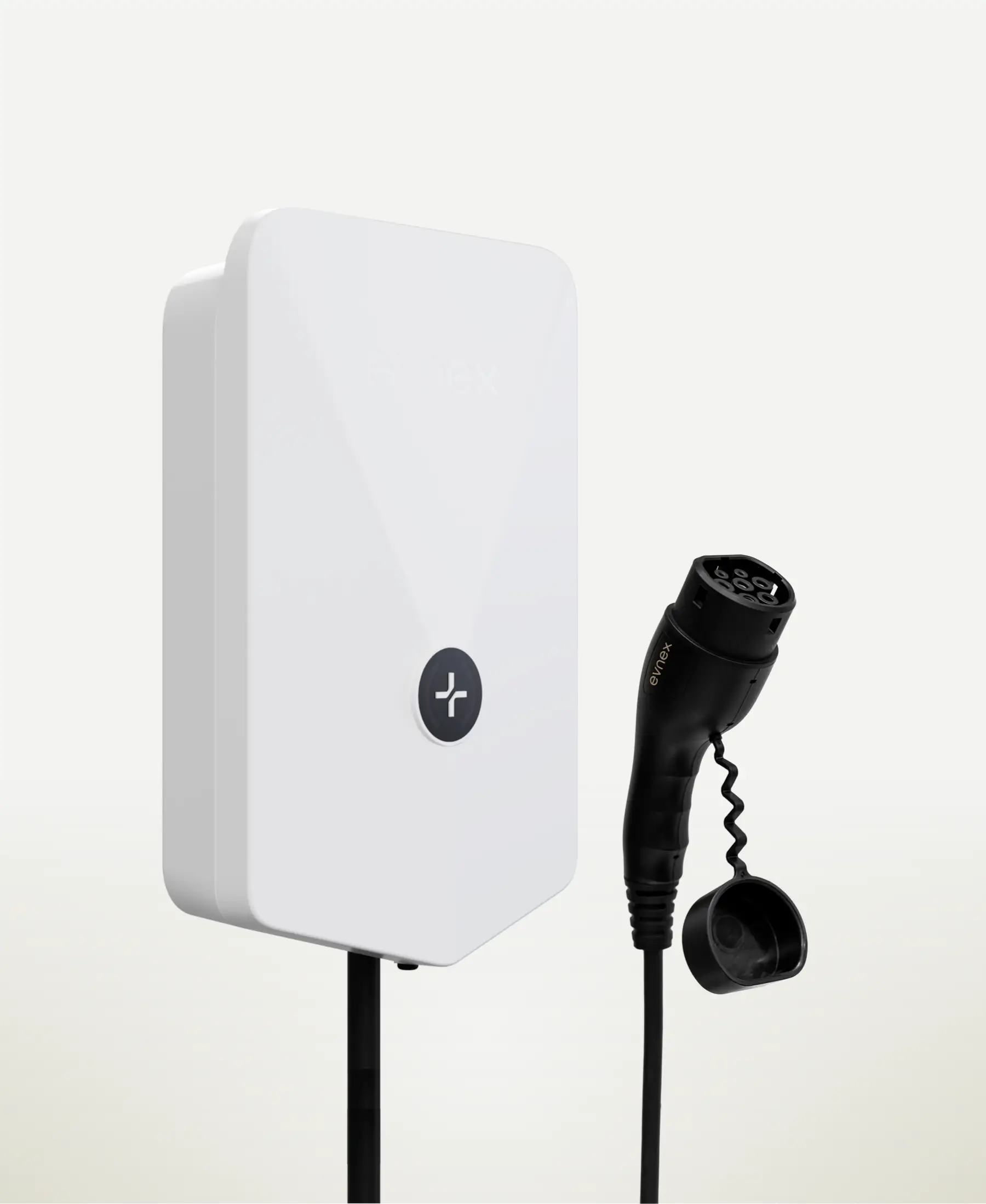
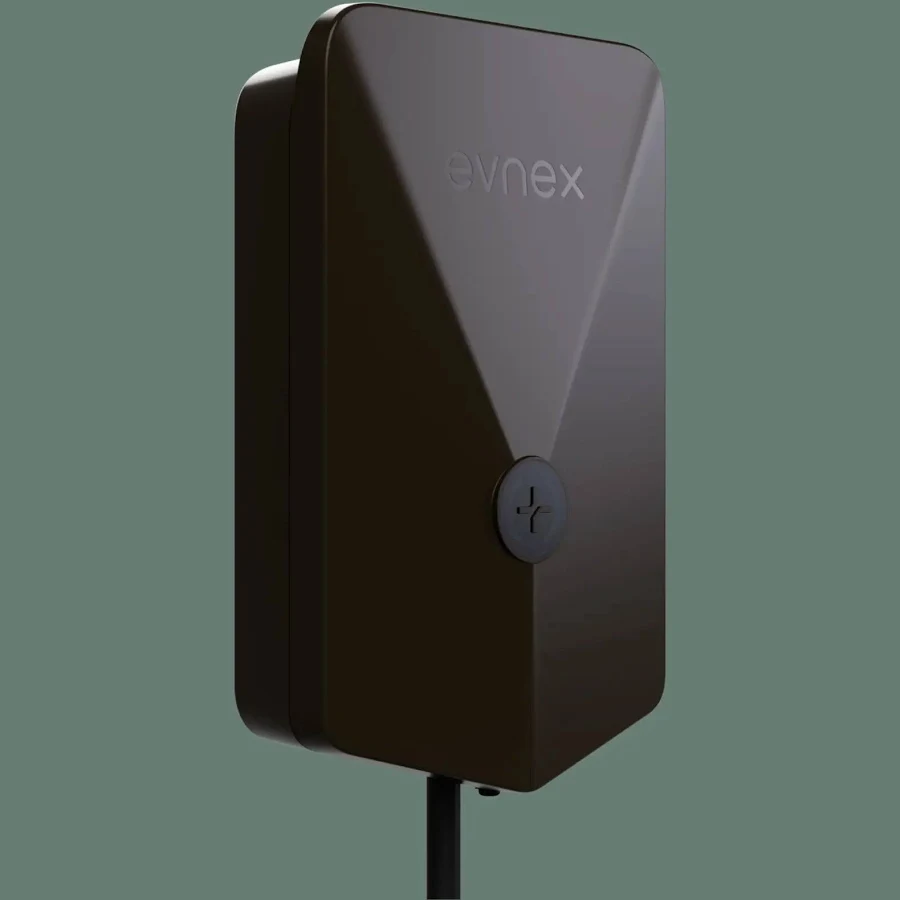
The Evnex E2 Flex is the entry-level smart charger in Evnex’s E2 range, positioned as the most affordable OCPP-capable charger in Australia. At $799, it sits $200 below the E2 Core ($999) by omitting the tethered cable. If you already have a Type 2 cable - or are happy to buy one separately for $50–$100 - the E2 Flex delivers identical smart charging features at the lowest price point in this category.
Evnex is a New Zealand-founded EV charging company with significant NZ market share. The E2 range launched in Australia in late 2025 with a growing installer network. The charger hardware is engineered in New Zealand; support and warranty claims are handled locally.
What $799 gets you
At $799 supply-only, the E2 Flex includes:
- 7.4kW single-phase output (32A)
- OCPP 1.6 connectivity with Evnex cloud platform
- Load management (CT clamp-based)
- 4-year warranty
- IP55 outdoor rating
- Wall-mount Type 2 socket (cable sold separately)
That’s a strong specification at the price. The main competitors at or near $799 either have shorter 2-year warranties, no load management, or basic scheduling-only without OCPP.
Total installed cost
Supply price is one thing. What you actually pay to have a working charger on your wall is another.
| Cost component | Typical range |
|---|---|
| E2 Flex supply | $799 |
| Licensed electrician installation | $400–$700 |
| Type 2 cable (if needed) | $50–$100 |
| Total all-in | ~$1,250–$1,600 |
Installation cost varies based on how far the switchboard is from the garage, whether a new dedicated circuit is needed, and your state’s electrician labour rates. Queensland and WA tend to run slightly higher than VIC and NSW.
This all-in cost compares favourably to most smart charger installations:
- Evnex E2 Core installed: ~$1,500–$1,800
- Wallbox Pulsar Plus installed: ~$1,800–$2,200
- myenergi Zappi installed: ~$2,000–$2,500
OCPP: what it means in practice
OCPP (Open Charge Point Protocol) is the industry standard communication protocol for EV chargers. On the E2 Flex it enables:
- Remote session start/stop via the Evnex app
- Charging schedule - set regular departure times with pre-set charge windows
- Real-time session monitoring - energy consumed, cost, session duration
- Load management - CT clamp reads household current draw and reduces charging power during high-load periods
- Energy reporting - monthly usage and cost summaries
The important caveat: Evnex’s OCPP implementation is closed. The charger communicates exclusively with Evnex’s own cloud backend. You cannot point it at a third-party OCPP server (Home Assistant, SolarEdge, CPO platforms). For the typical residential user managing one charger, this doesn’t matter - the Evnex app does everything needed. For building managers or users with home automation requirements, the closed implementation is a genuine limitation.
Load management
Load management is the E2 Flex feature that most directly prevents problems. In a typical Australian home with a 63A or 80A main fuse, running a 32A EV charger simultaneously with an electric oven, ducted air conditioning, and an instant hot water system can trip the main breaker.
Load management solves this by installing a CT clamp on your main switchboard. The clamp monitors total household draw in real time. If the combined load approaches the fuse limit, the charger automatically reduces its charge rate. When other loads drop off (oven turns off, AC cycles down), the charger ramps back up.
This is particularly valuable in older Australian homes with 40A or 60A supplies, or in apartments where electrical capacity per dwelling is constrained.
Solar: what the E2 Flex can and can’t do
The E2 Flex does not support real-time solar diversion. It has no CT clamp input for solar generation monitoring, and it cannot dynamically modulate charge current based on live solar surplus.
What it can do via scheduled charging: if your solar production peaks reliably between 10am and 3pm, you can schedule the charger to run during that window. On a clear sunny day, this works reasonably well. On cloudy or variable days, the scheduled approach means you’ll be drawing from the grid when the schedule runs - unlike a true solar diversion system, which would pause or reduce charging when solar drops.
If solar self-consumption is a priority, the Evnex E2 Plus ($1,299) adds CT clamp solar integration. Alternatively, the myenergi Zappi ($1,499 supply) is purpose-built for solar diversion and is the category leader for this use case.
E2 Flex vs. the rest of the Evnex range
| E2 Flex | E2 Core | E2 Plus | |
|---|---|---|---|
| Price | $799 | $999 | $1,299 |
| Cable | Socket only | 6m tethered | 6m tethered |
| OCPP | 1.6 (closed) | 1.6 (closed) | 1.6 (closed) |
| Load management | Yes | Yes | Yes |
| Solar integration | No | No | Yes (CT clamp) |
| Warranty | 4 years | 4 years | 4 years |
The choice within the Evnex range is straightforward:
- E2 Flex if you have or will buy your own cable and want the lowest price
- E2 Core if you want a tethered charger and neater installation
- E2 Plus if you have solar and want to maximise self-consumption
E2 Flex vs. key alternatives
| Evnex E2 Flex | Wallbox Pulsar Plus | myenergi Zappi | ZJ Beny 7kW | |
|---|---|---|---|---|
| Price | $799 | $1,299 | $1,499 | $700 |
| OCPP | Closed 1.6 | Open 1.6 | Proprietary | Open 1.6 |
| Solar | No | No | Yes | No |
| Load management | Yes | Yes | Yes | No |
| Warranty | 4 years | 2 years | 3 years | 2 years |
| Cable | Socket | Socket | Tethered | Tethered |
The E2 Flex’s strongest advantages over competitors at similar price points are the 4-year warranty and load management at $799. The Wallbox Pulsar Plus costs $500 more and comes with open OCPP (interoperable with third-party platforms) but only a 2-year warranty. The ZJ Beny at $700 is cheaper but lacks load management and has a shorter warranty with China-based support.
Who should buy it
Best for:
- Households on a budget who want smart scheduling and load management without solar integration
- Buyers who already own a Type 2 cable and want to keep costs minimal
- Apartment or older-home installs where load management is specifically needed to prevent switchboard trips
- Buyers who want a longer warranty at the lowest smart charger price in Australia
Skip if:
- You have solar and want to charge from surplus generation (E2 Plus or Zappi)
- You need open OCPP interoperability for home automation or commercial CPMS (Wallbox Pulsar Plus or Delta AC Max)
- You want a tethered cable with no cable management (pay the $200 premium for the E2 Core)