Gridly
Overview
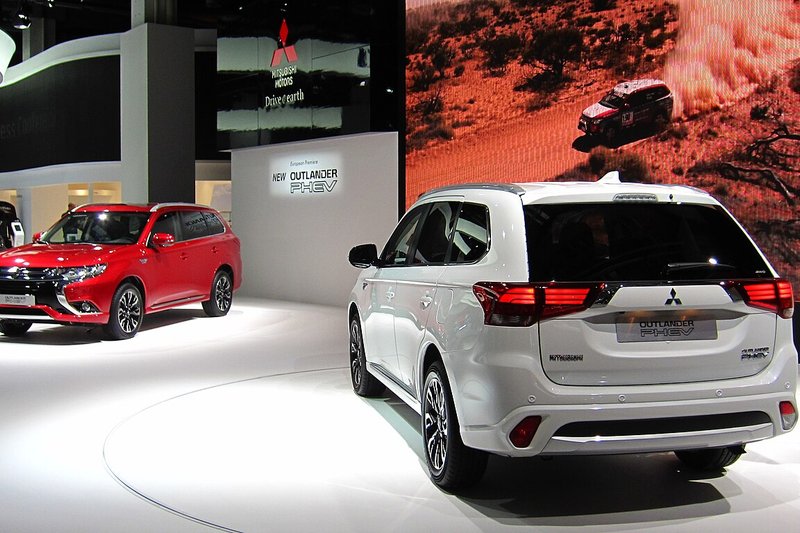
The Mitsubishi Outlander PHEV is the vehicle that introduced mainstream Australia to plug-in hybrid technology. The third-generation model has grown in battery capacity, range, and interior quality while retaining the defining features that made the original successful: twin-motor AWD with Mitsubishi’s S-AWC torque vectoring system, a plug-in battery for daily electric driving, and a petrol engine for extended range.
The Exceed is the flagship trim - fully equipped with the complete interior specification and the highest-grade technology and safety features Mitsubishi offers in the Outlander range. With 22.7 kWh of usable battery capacity, the current Outlander PHEV Exceed offers 86 km of WLTP EV range, making it one of the longest-range PHEVs available in Australia in an SUV body.
The 86 km claimed EV range is a headline figure. Real-world EV range at highway speed will be less - approximately 65–70 km. At urban speeds with moderate loads, the claimed figure is achievable. For commuters who cover 60–80 km daily, the Exceed can operate primarily on electricity throughout the working week.
Pricing & Variants
| Variant | Battery | EV Range | Drive | Seats | Price |
|---|---|---|---|---|---|
| Outlander PHEV ES | 22.7 kWh | ~86 km | AWD | 5/7 | ~$51,990 |
| Outlander PHEV LS | 22.7 kWh | ~86 km | AWD | 5/7 | ~$57,490 |
| Outlander PHEV Exceed | 22.7 kWh | ~86 km | AWD | 5/7 | ~$58,990 |
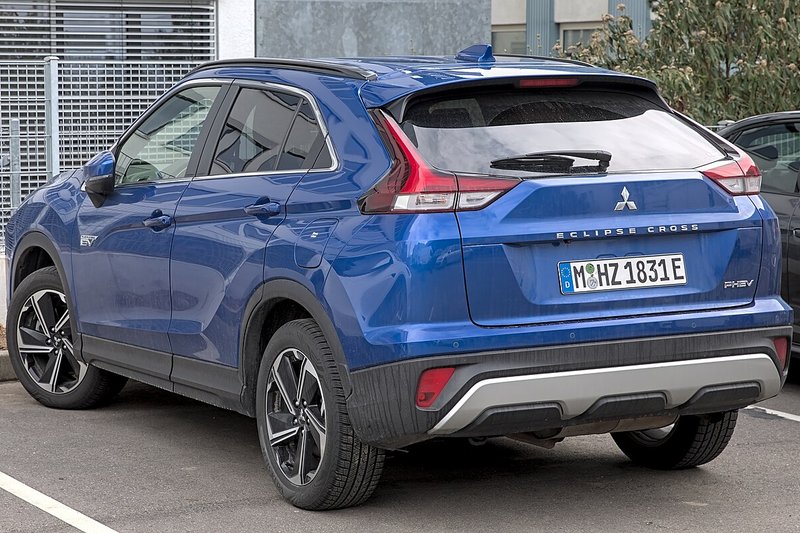
| Eclipse Cross PHEV | 13.8 kWh | ~55 km | AWD | 5 | ~$51,990 |
Performance
Combined system power: approximately 160 kW. The Outlander PHEV uses two electric motors - front and rear - powered by the battery, supplemented by a 2.4-litre Atkinson-cycle petrol generator. In EV mode, both motors operate independently for AWD traction with torque vectoring capability via the S-AWC system.
0-100 km/h: approximately 7.0 seconds in Sport mode with full battery charge. Top speed: 180 km/h. The S-AWC system monitors lateral acceleration and individual wheel speeds to redistribute torque through corners, improving handling stability beyond what a conventional AWD system can achieve.
Range and Charging
EV-only range: approximately 86 km (WLTP). Urban real-world estimate: 70–82 km. Highway EV range: 55–65 km at 110 km/h. Total range including petrol: 700+ km.
AC charging: up to 7.2 kW via Type 2 wallbox - 0 to 100% in approximately 2.5 hours. Standard 10A household outlet charges overnight. No DC fast charging is supported. The 50 kW charge speed listed in some specifications refers to the vehicle’s charging capability class, not DC.
Running cost in EV mode at $0.30/kWh: approximately (22.7 / 86) × 100 × 0.30 = $7.92/100 km. Hybrid mode returns approximately 1.9–2.5 L/100 km blended when charging frequently.
Interior and Technology
The Exceed’s cabin benefits from Mitsubishi’s premium specification: 12.3-inch digital instrument cluster, 12.3-inch touchscreen infotainment with wireless Apple CarPlay and Android Auto, and a premium Bose audio system standard. Heated and ventilated front seats, a heated steering wheel, and panoramic sunroof are Exceed-specific items.
Seven-seat configuration: third-row seats fold flat into the floor. Third-row accommodation is suitable for children; adults will find legroom limited. The third row is included as standard in the Exceed, not as an option.
Practicality
Boot volume: approximately 450 L (5-seat) or 192 L (7-seat, third row in use). Full flat floor with all seats folded: maximum load space. Towing capacity: 1,500 kg braked - capable of towing a mid-size caravan or trailer.
V2L: not available. V2H: not available. The PHEV battery cannot be used for household power export.
Safety
Five-star ANCAP. Mitsubishi e-Assist: Forward Collision Mitigation with pedestrian and bicycle detection, Lane Departure Warning, Rear Cross Traffic Alert, Blind Spot Warning, Ultrasonic Misacceleration Mitigation. Adaptive Cruise Control with Stop & Go standard on Exceed.
Running Costs and Ownership
EV running cost: approximately $7.92/100 km at $0.30/kWh in pure EV mode. Drivers who charge nightly and cover under 86 km daily will rarely need petrol for weekday driving. Hybrid fuel economy after battery depletion: approximately 5.5–7.0 L/100 km.
Warranty: 5 years / 100,000 km. Mitsubishi’s Australian dealer network is among the most comprehensive in the country - servicing is available in every major regional centre and most remote areas. PHEV specialist technicians are trained at all Mitsubishi dealers.
Verdict
The Outlander PHEV Exceed is the mature, fully developed family PHEV for buyers who want AWD, optional seven-seat capacity, and the most EV range available in a mainstream PHEV SUV at this price. The twin-motor AWD and long EV range make it one of the more capable PHEVs in the Australian market, and the Exceed’s specification level ensures no significant feature is missing.
The primary concession is the absence of DC fast charging - charging always requires an AC connection, which means public charging stops on longer trips require more time planning. For families who charge at home and use the petrol engine for highway travel, this is rarely a limitation in practice.
Frequently Asked Questions
Does the Outlander PHEV Exceed include seven seats as standard?
Yes. The Exceed specification includes the seven-seat configuration as standard. The third-row seats fold flat when not in use, preserving boot space.
How much does it cost to run the Outlander PHEV on electricity?
At $0.30/kWh, EV running costs are approximately $7.92/100 km. If you charge overnight on a standard household electricity rate and drive predominantly in EV mode, your weekly fuel cost will be significantly lower than a conventional petrol SUV.
Can the Outlander PHEV tow a caravan?
Yes. The Exceed has a 1,500 kg braked towing capacity. For caravans under this weight, the Outlander PHEV can tow in hybrid mode with the petrol engine providing sustained power. EV range reduces substantially when towing.