Gridly
Overview
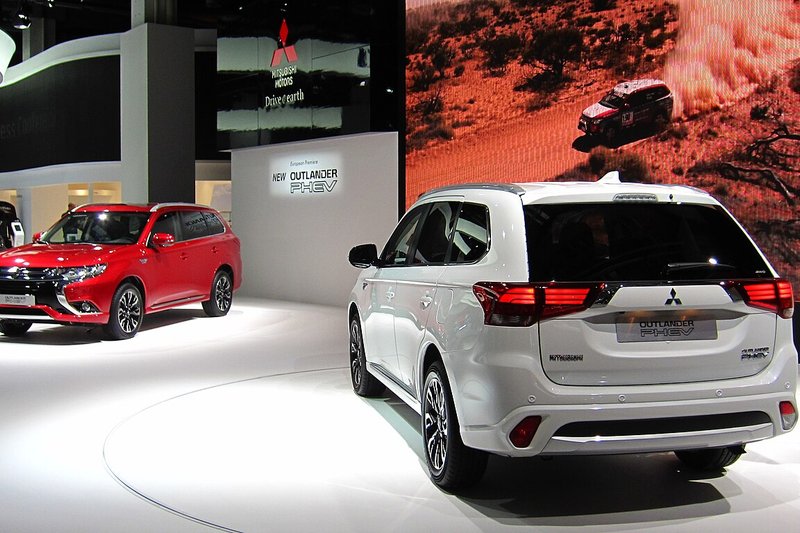
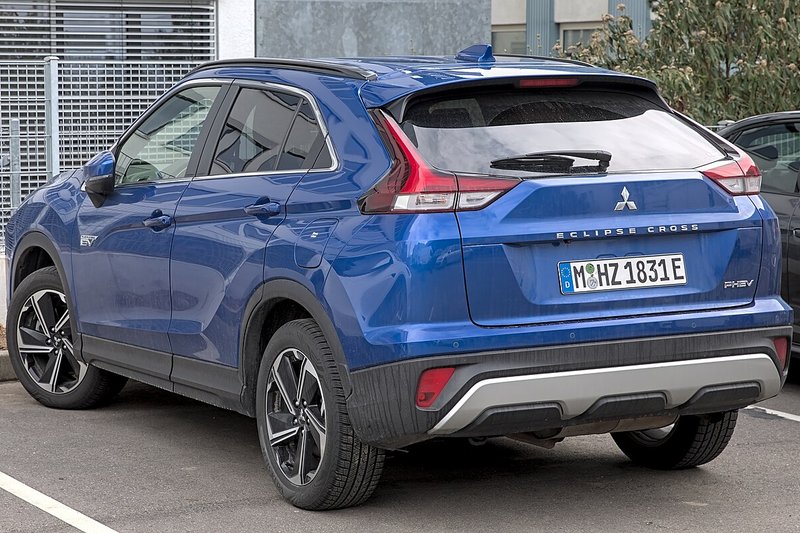
The Eclipse Cross PHEV applies Mitsubishi’s twin-motor AWD plug-in hybrid technology to a smaller body than the Outlander. Where the Outlander suits families with five or seven seats and towing requirements, the Eclipse Cross targets couples and small families who want PHEV economy in a more compact, urban-friendly package.
The 55km EV range covers typical daily commuting patterns in most Australian cities. Mitsubishi’s S-AWC (Super All Wheel Control) torque vectoring system manages AWD traction with individual wheel braking to improve cornering stability - a more sophisticated AWD implementation than torque-split-only systems found in many competitors.
Mitsubishi has more than a decade of PHEV development behind the Eclipse Cross platform. The current generation benefits from accumulated refinement: smoother transitions between EV and hybrid modes, improved regenerative braking calibration, and an AC charging system capable of overnight home top-ups on a standard 7.2kW charger.
Pricing & Variants
| Variant | Battery | EV Range | Drive | Price |
|---|---|---|---|---|
| Eclipse Cross PHEV | 13.8 kWh | ~55 km | AWD | ~$51,990 |
| Outlander PHEV ES | 22.7 kWh | ~86 km | AWD | ~$51,990 |
| Outlander PHEV Exceed | 22.7 kWh | ~86 km | AWD | ~$58,990 |
Performance
The Eclipse Cross PHEV uses a 2.4-litre Atkinson-cycle petrol engine combined with two electric motors - one on the front axle, one on the rear - for a combined system output of approximately 150 kW. The twin-motor configuration provides genuine AWD rather than mechanically coupled four-wheel drive, allowing each axle to receive torque independently.
0-100 km/h takes approximately 8.0 seconds in EV mode with full battery charge. Top speed is electronically limited to 165 km/h. The S-AWC system uses individual wheel braking to vector torque through corners, contributing to sharper turn-in than the AWD-only vehicles in the segment.
Range and Charging
EV-only range: approximately 55 km (WLTP). Real-world urban estimate: 45–52 km depending on temperature and load. Highway EV range is significantly reduced, typically 30–40 km.
The 13.8 kWh battery charges at up to 3.7 kW on a standard household outlet (approximately 4–5 hours full charge) or 7.2 kW on a wallbox (approximately 1.5–2 hours). There is no DC fast charging on the PHEV platform. The petrol engine provides unlimited range on extended trips; fuel consumption in hybrid mode averages approximately 6.5 L/100 km.
Running cost in EV mode at $0.30/kWh: approximately (13.8 / 55) × 100 × 0.30 = $7.53/100 km. In hybrid mode, petrol costs apply at prevailing pump prices.
Interior and Technology
The Eclipse Cross cabin is well-proportioned for its size: comfortable for four adults with snug but usable rear legroom. The instrument panel uses a 8-inch central touchscreen with Apple CarPlay and Android Auto wired. Wireless smartphone connectivity is not available on all variants.
Physical climate controls are retained below the touchscreen - a practical decision that Mitsubishi has maintained while other brands move to full-touch interfaces. Heated front seats and a heated steering wheel are standard on the PHEV variant.
ADAS suite: Forward Collision Mitigation with pedestrian detection, Lane Departure Warning, Rear Cross Traffic Alert, and Blind Spot Warning are standard.
Practicality
Five seats. Boot capacity: approximately 378 L with the rear seats up - smaller than some compact SUV competitors but adequate for daily shopping loads. The PHEV battery pack is packaged under the floor, preserving most of the cargo area without a raised boot floor.
Towing capacity: 1,500 kg braked - the same as the Outlander PHEV. The compact body is easier to park in dense urban environments where the Outlander’s dimensions can be a hindrance.
V2L: not available. V2H: not available.
Safety
Five-star ANCAP. Mitsubishi e-Assist standard: Forward Collision Mitigation (FCM) with pedestrian detection, Lane Departure Warning, Ultrasonic Misacceleration Mitigation System (UMS), and Rear Cross Traffic Alert. Blind Spot Warning standard on PHEV variant.
Running Costs and Ownership
EV running cost: approximately $7.53/100 km at $0.30/kWh in pure EV mode. Hybrid mode adds petrol consumption; real-world blended cost depends on charging behaviour - drivers who charge nightly will achieve lower running costs.
Warranty: 5 years / 100,000 km - above the segment average for Japanese brands. Mitsubishi’s dealer network is one of the most extensive in Australia, covering metropolitan, regional, and rural areas. PHEV-trained service technicians are available across the network.
Verdict
The Eclipse Cross PHEV is for buyers who want Mitsubishi’s proven AWD PHEV technology in a compact body that is genuinely easier to live with in urban Australia. The 55 km EV range is sufficient for typical daily commutes; the petrol engine covers the rest without compromise. The S-AWC system is the technical highlight - genuine AWD torque vectoring that distinguishes it from simpler single-motor PHEV alternatives.
The concessions are real: no DC fast charging, less range than the Outlander PHEV, and a smaller cabin. But for buyers who don’t need seven seats or extended towing and want the smallest practical PHEV SUV with AWD, the Eclipse Cross remains one of the few options in the segment.
Frequently Asked Questions
What is the difference between the Eclipse Cross PHEV and the Outlander PHEV?
The Outlander PHEV uses a larger 22.7 kWh battery for approximately 86 km of EV range versus the Eclipse Cross’s 13.8 kWh / 55 km. The Outlander is also available as a 7-seat vehicle and has a longer wheelbase. The Eclipse Cross is approximately 200 mm shorter in overall length, making it easier to park in tight urban spaces.
Can the Eclipse Cross PHEV use a public fast charger?
No. The Eclipse Cross PHEV charges only on AC - either a standard 240V outlet (3.7 kW) or a 7.2 kW wallbox. It does not support DC fast charging. Public AC chargers (Type 2) are compatible.
What is the real-world fuel economy when the battery is depleted?
In charge-sustaining hybrid mode after the battery is depleted, the Eclipse Cross PHEV returns approximately 6.0–7.5 L/100 km depending on speed and driving style. Highway driving at constant speed is more efficient than stop-start urban use in hybrid mode.