Gridly
Overview
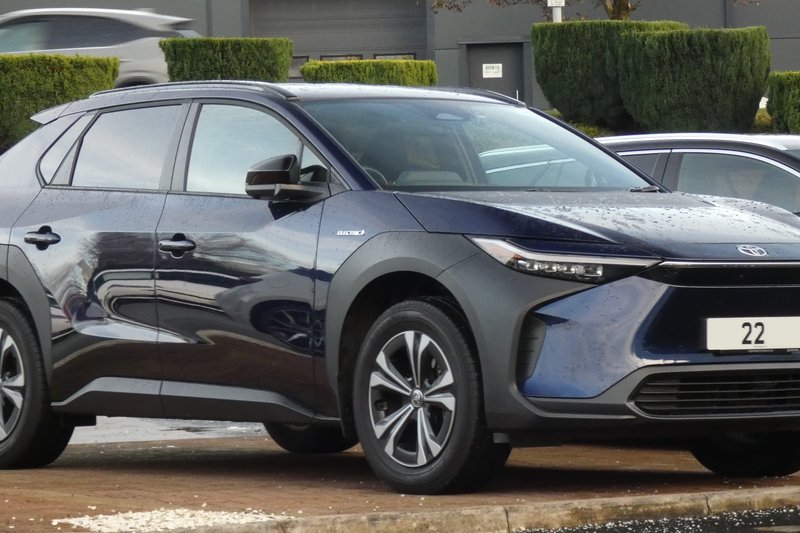
The bZ4X FWD is the single-motor, front-wheel-drive variant of Toyota’s dedicated electric SUV. With the AWD system and its associated mass removed, and with a 75 kWh battery (per vehicle data), the FWD delivers 591 km of WLTP range - making it one of the more range-competitive Toyota EVs.
The FWD variant is approximately $13,000 less than the AWD (per vehicle data prices of $55,990 vs $69,000). For buyers who live in consistently dry climates, drive primarily on sealed roads, and don’t tow heavily, the FWD is the rational choice: more range, lower price, same dealer support.
The bZ4X is built on Toyota’s e-TNGA platform, co-developed with Subaru. The FWD variant is the more common configuration globally, and has had more development time in the market. It is Toyota’s clearest statement that a mainstream, reliable, uncomplicated EV can be delivered to the mass market through the world’s most extensive dealer network.
Pricing & Variants
| Variant | Battery | WLTP Range | Drive | Price |
|---|---|---|---|---|
| bZ4X FWD | 75 kWh | ~591 km | FWD | ~$55,990 |
| bZ4X AWD | 71.4 kWh | ~450 km | AWD | ~$69,000 |
Performance
Single front motor. Output: approximately 150 kW. 0-100 km/h: 7.5 seconds (per vehicle data). Top speed: 160 km/h. The FWD configuration is smooth and linear - Toyota’s powertrain calibration prioritises smooth progressive acceleration over dramatic launches. The single-motor FWD is more than adequate for everyday driving, highway merging, and overtaking.
Regenerative braking has selectable levels; the one-pedal driving mode is available for urban use.
Range and Charging
WLTP range: 591 km (per vehicle data). Real-world highway range at 110 km/h: approximately 470–515 km. Urban and mixed driving: 530–565 km. The FWD’s range profile makes it a competitive touring EV at its price point.
DC fast charging: 150 kW. 10–80%: approximately 28–33 minutes. AC: 6.6 kW single-phase (11 kW three-phase available as option). Overnight home charge from empty at 6.6 kW: approximately 12 hours.
Running cost at $0.30/kWh: (75 / 591) × 100 × 0.30 = $3.81/100 km - excellent efficiency for the class.
Interior and Technology
Toyota’s bZ4X interior is conventional and functional. The 11.6-inch vertical touchscreen provides the primary interface for navigation, media, and vehicle settings. Wireless CarPlay and Android Auto are standard. Physical climate controls are retained - a practical decision that reduces touchscreen interaction for common functions.
The optional solar roof supplements battery charge on sunny days. Toyota claims approximately 1,800 km of additional range per year under ideal conditions - a unique feature in the EV market that serves as a daily trickle charge for light commuting use.
The driver’s seat position is notably lower than in most SUVs - a deliberate design choice for a car-like driving experience. Some drivers prefer this; others find it unusual after conventional SUV seating.
Practicality
Five seats. Boot: approximately 452 L. Flat EV floor throughout - no drivetrain tunnel in the rear passenger footwell. Towing: 750 kg braked. V2L: not available. V2H: not available.
Front storage: a small under-hood frunk is available on some variants.
Safety
Five-star ANCAP. Toyota Safety Sense: Pre-Collision System with pedestrian and cyclist detection, Radar Cruise Control with stop-and-go, Lane Departure Alert, Lane Trace Assist, Automatic High Beam, Road Sign Assist. Blind Spot Monitor standard.
Running Costs and Ownership
Running cost: approximately $3.81/100 km at $0.30/kWh - among the most efficient results in the mid-size SUV segment. Warranty: 5 years / unlimited km (per vehicle data). Toyota’s EV battery is covered under a separate long-term battery capacity warranty - confirm specifics with Toyota Australia.
Toyota’s dealer network coverage in Australia is unmatched: every regional city, most country towns, and available support in remote areas through regional Toyota centres. For buyers who regularly travel beyond metropolitan Australia, this is a material advantage over all Chinese and most Korean EV brands.
Verdict
The bZ4X FWD delivers 591 km of WLTP range with Toyota’s service backing at $55,990 - the entry point for a Toyota EV with genuine long-range capability. The 150 kW DC charging is adequate rather than exceptional; competitors like the XPeng G6 Long Range charge at 280 kW for a similar price.
For Toyota-loyal buyers entering the EV market and prioritising range over charging speed, the FWD is the more efficient and better-value starting point than the AWD. The Toyota ownership experience - known dealer relationships, reliable servicing, confidence in remote areas - has value that the specification sheet doesn’t fully capture.
Frequently Asked Questions
How much cheaper is the FWD compared to the AWD bZ4X?
Approximately $13,000 less ($55,990 vs $69,000 per current data). The FWD also has 140 km more WLTP range from a slightly larger battery. For buyers who don’t need AWD, the FWD is the clear value choice.
Does the solar roof option make a meaningful difference?
Toyota claims approximately 1,800 km of additional range annually under ideal conditions (direct sunlight, moderate temperatures). In practice, Australian cities receive strong solar radiation and the benefit is real - roughly equivalent to 4–5 extra full charges per year, or approximately $40–50 of electricity savings annually. It is a practical feature rather than a decisive one.
Is the bZ4X FWD suitable for regular Melbourne-Sydney trips?
Yes. At 591 km WLTP, real-world highway range of 470–515 km is sufficient to comfortably reach Albury from Sydney (or Wodonga from Melbourne) on a single charge, with one planned stop making the full trip practical. Charging availability on the Hume Highway corridor continues to improve.