 Gridly
Overview
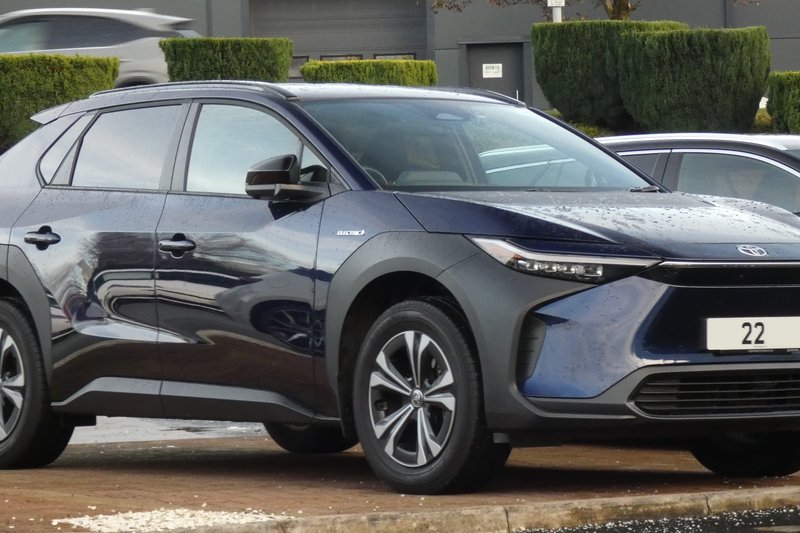
The Toyota bZ4X is Toyota’s first major dedicated EV - a significant departure for the brand that built its reputation on hybrid technology. Co-developed with Subaru, the bZ4X uses a new e-TNGA platform designed specifically for battery-electric vehicles. The AWD variant uses dual motors for all-wheel traction, targeting the broad Australian market where SUV versatility is the dominant purchase rationale.
Toyota’s dealer network is the defining competitive advantage the bZ4X carries. With dealerships in regional and rural areas where Chinese EV brands have no service presence, and where Korean manufacturers are present but less comprehensively, Toyota’s infrastructure provides an ownership security that no other EV manufacturer in Australia can match.
The bZ4X’s limitations - 150 kW DC charging and 450 km WLTP (per vehicle data) - are real and acknowledged. In a rational specification comparison against the Kia EV5 or Hyundai Ioniq 5, the Toyota trails on charging speed and range. The counterpoint is that most bZ4X buyers will charge at home and at Toyota dealers, where service quality is guaranteed.
Pricing & Variants
| Variant | Battery | WLTP Range | Drive | Price |
|---|---|---|---|---|
| bZ4X FWD | 75 kWh | ~591 km | FWD | ~$55,990 |
| bZ4X AWD | 71.4 kWh | ~450 km | AWD | ~$69,000 |
Performance
Dual motor AWD. Combined output: approximately 160 kW. 0-100 km/h: 6.9 seconds (per vehicle data). Top speed: 160 km/h. The dual-motor AWD system provides genuine all-weather traction; the 160 kW combined output is modest by EV standards but adequate for the vehicle’s family SUV character.
The bZ4X’s AWD system actively distributes torque between front and rear motors for stability rather than simply for performance - it reflects Toyota’s emphasis on all-condition confidence over sport driving.
Range and Charging
WLTP range: 450 km (per vehicle data). Real-world highway range at 110 km/h: approximately 360–395 km. Urban and mixed driving: 390–425 km.
DC fast charging: 150 kW. 10–80%: approximately 30–35 minutes. AC: 6.6 kW single-phase standard (11 kW three-phase as option). Overnight home charge from empty at 6.6 kW: approximately 12 hours.
Running cost at $0.30/kWh: (71.4 / 450) × 100 × 0.30 = $4.76/100 km.
Interior and Technology
Toyota’s interior reflects its mainstream positioning: functional, well-built, and conventional. An 11.6-inch vertical touchscreen handles infotainment; wireless CarPlay and Android Auto are standard. Physical climate controls are retained below the screen. The steering wheel uses a yoke design on some variants - a design choice that divides opinion.
Available solar roof option: on sunny days, the solar panel supplements the battery for approximately 1,800 km of additional range per year under ideal conditions - a uniquely Toyota feature that no other EV manufacturer offers in Australia. The practical benefit varies with location and season.
Ambient lighting, a panoramic roof, and leather seats are available at higher specification levels.
Practicality
Five seats. Boot: approximately 452 L - competitive for the class. The flat EV floor provides a level cargo surface. Towing capacity: 750 kg braked - meaningfully less than Korean and European competitors at the same price, which typically offer 1,200–2,000 kg. No V2L or V2H.
The AWD system does not compromise interior space; the flat floor is maintained across both FWD and AWD variants.
Safety
Five-star ANCAP. Toyota Safety Sense standard: Pre-Collision System with pedestrian and cyclist detection, Radar Cruise Control, Lane Departure Alert, Lane Trace Assist, Automatic High Beam, Road Sign Assist. Blind Spot Monitor and Rear Cross Traffic Alert standard on AWD.
Running Costs and Ownership
Running cost: approximately $4.76/100 km at $0.30/kWh. Warranty: 5 years / unlimited km (per vehicle data). Toyota’s dealership infrastructure is the most comprehensive of any manufacturer in Australia - metropolitan, regional, and rural coverage is superior to every other EV brand. Service staff are trained on bZ4X-specific requirements.
Verdict
The bZ4X AWD is for Toyota buyers making their first EV transition - the familiar dealer experience, service confidence, and the Toyota brand’s reliability culture applied to an electric platform. The charging speed and range trail Korean alternatives at the same price, and the 750 kg towing limit is a genuine concession for buyers who need towing capability.
For buyers who specifically value Toyota’s dealer infrastructure, brand reputation, and the certainty that comes from the world’s largest automotive manufacturer’s EV platform, the bZ4X delivers that with AWD capability.
Frequently Asked Questions
Why is the bZ4X AWD’s range less than the FWD variant?
The AWD variant uses a 71.4 kWh battery versus the FWD’s 75 kWh, and the dual-motor AWD system adds mass and drivetrain losses. The result is approximately 140 km less WLTP range. Buyers who don’t need AWD and prioritise range should choose the FWD.
Is the Toyota bZ4X the same as the Subaru Solterra?
Yes. The bZ4X and Subaru Solterra share the same e-TNGA platform, battery, and motors. They differ in exterior styling, interior design, safety features, and brand positioning. The Solterra targets buyers who prefer Subaru’s identity; the bZ4X is for Toyota buyers.
What is the towing capacity of the bZ4X AWD?
750 kg braked. This is lower than most EV competitors at this price point. Korean alternatives (Hyundai Ioniq 5, Kia EV6) typically offer 1,600–1,800 kg. Buyers who regularly tow should evaluate alternatives.