Gridly
Overview
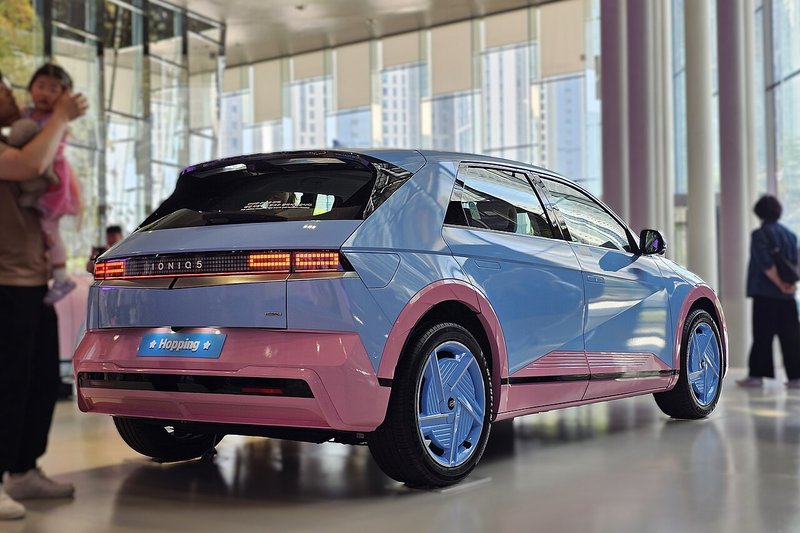
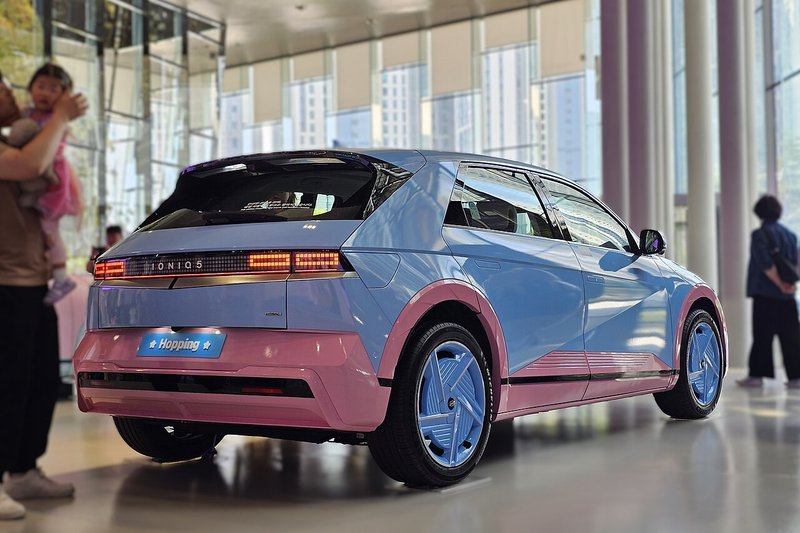
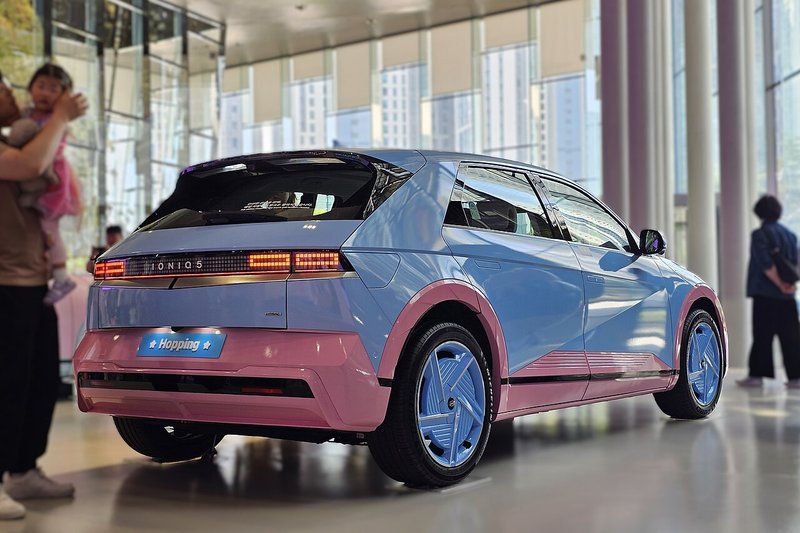
Hyundai’s E-GMP electric platform was built around one idea: make the structure of the car itself serve the electric drivetrain rather than adapt an EV powertrain into a body designed for combustion. The Ioniq 5 Standard Range is the most affordable way to experience what that decision produces. A skateboard chassis with batteries between the axles delivers a flat floor across the full width of the cabin, more legroom than cars two categories larger, and suspension geometry uncompromised by any drivetrain tunnel. The result is a car that consistently surprises passengers who haven’t experienced a purpose-built EV.
The Standard Range sits beneath the Elite and N Line AWD in the Ioniq 5 range. It sacrifices battery capacity - 63kWh versus 84kWh in the long-range grades - and gives up some real-world highway distance in the process. What it does not sacrifice is the platform itself: the 800V electrical architecture, the 220kW DC charging capability, the V2L power output, or the build quality. At its price point in Australia, the Standard Range is the entry point for a genuinely advanced electric vehicle rather than an entry-level product with the best features removed.
Pricing & Variants
| Variant | Battery | WLTP Range | DC Charging | Price |
|---|---|---|---|---|
| Ioniq 5 Standard Range | 63kWh | 429 km | 220kW | ~$64,900 |
| Ioniq 5 Elite | 84kWh | 591 km | 350kW | ~$72,900 |
| Ioniq 5 N Line AWD | 84kWh | 548 km | 350kW | ~$79,900 |
The Standard Range is approximately $8,000 less than the Elite. That gap funds a 63kWh battery upgrade to 84kWh, an additional 162km of WLTP range, and 130kW of additional DC charging capacity. High-kilometre drivers will find the Elite pays for itself in charging time and trip convenience over two to three years. For buyers whose primary use is suburban and urban driving with occasional highway trips, the Standard Range’s lower price point is legitimate.
On-road costs vary by state. The federal FBT exemption applies to zero-emission vehicles below the luxury car tax threshold, and the Ioniq 5 at this price qualifies. Stamp duty concessions in ACT, Victoria, and Queensland reduce the initial outlay further.
Performance
The Standard Range runs a single rear-mounted motor producing 160kW and 350Nm. That output is adequate rather than exciting: 0-100 km/h arrives in around 8.5 seconds, which is comparable to a mid-range petrol hatchback rather than anything performance-oriented. What the figures obscure is that EV torque delivery is instant from rest, meaning the Ioniq 5 feels livelier than 8.5 seconds suggests in traffic and at urban speeds.
Highway merging and overtaking work without drama. The car accelerates smoothly from 80 to 120 km/h with enough reserve to complete passes quickly. The single-motor RWD layout keeps weight down relative to the AWD variant, which contributes to the better WLTP efficiency that preserves range.
Ride quality is one of the Ioniq 5’s stronger attributes regardless of variant. The long wheelbase - 3,000mm, matching some large SUVs - gives the suspension room to absorb road surfaces progressively. The result is a car that rides comfortably on the variable road conditions found across Australian states, from smooth motorways to rougher regional surfaces.
Range and Charging
The 429km WLTP figure reflects test conditions. Australian highway driving at 110 km/h with climate control active returns between 330 and 370km. Urban driving, with more regenerative events, typically delivers 380 to 410km. The practical implication: Sydney to Canberra (280km) is achievable without stopping, but Sydney to Melbourne (880km) requires three charges rather than the two that the Elite long range manages.
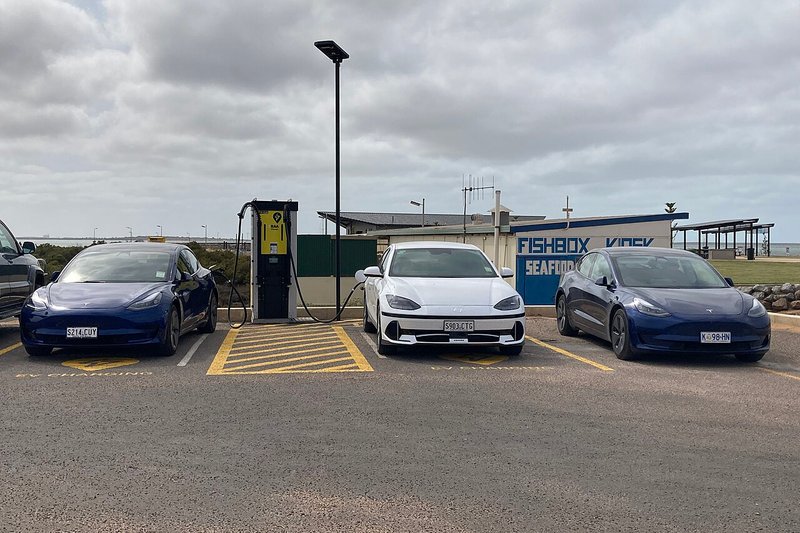
The 800V E-GMP architecture makes charging fast when infrastructure supports it. At a compatible 220kW DC station, 10 to 80 per cent takes approximately 18 minutes. In Australia, Chargefox operates a growing ultra-rapid network with 350kW capable stations at key highway intervals - the Ioniq 5 Standard Range accepts up to 220kW, so it won’t saturate the fastest chargers but will charge significantly faster than most rivals at the same sites. AC charging at home via a three-phase 11kW wallbox takes around seven hours from near-empty.
Vehicle-to-Load is standard. The exterior outlet delivers up to 3.6kW, enough to run power tools on a worksite, an induction cooker, or standard household appliances in a camping or emergency context. This capability is absent from both Tesla Model 3 variants and most European competition at this price.
Interior and Technology
The Ioniq 5’s interior layout is the direct product of its flat-floor architecture. The centre console floats between the seats - not mounted to a transmission tunnel - and can slide forward, creating a walk-through passage between front and rear. Rear legroom is exceptional for a car of this external footprint, routinely accommodating tall adults without the knee-to-seatback compression common in traditional sedans and hatches.
Material quality at the Standard Range grade is solid. Dashboard surfaces use recycled materials - the trim programme is more extensive in the Elite - but the overall feel is well-constructed with consistent panel gaps and no unsettling plastics in touch-point areas. The 12.3-inch infotainment screen and 12.3-inch digital cluster share a single continuous housing, which looks cohesive and reads clearly in direct sunlight.
Physical rotary controls for temperature and fan speed sit below the screen. This design choice, increasingly rare in EVs, means basic climate adjustments never require a menu navigation. Over-the-air software updates are supported.
Standard safety features include forward collision avoidance, lane keeping assist, blind-spot monitoring, driver attention warning, and adaptive cruise with lane centring. The Ioniq 5 holds a five-star ANCAP rating across all variants.
Practicality
Boot space is 531L under the tailgate, with a 24L frunk above the front motor housing. The frunk is shallow but functional for charging cables. Interior storage includes a sliding console with multiple compartments, door pockets large enough for 1L bottles, and a rear armrest with cupholders.
Five adults fit comfortably. The rear bench accommodates three passengers for short trips, though the centre position is the firmest of the three. Rear passengers get USB-C charging ports and their own temperature controls in the Elite and above - the Standard Range provides charging ports.
Towing capacity is 1,600kg braked - enough for a small to medium trailer, a jetski, or a light caravan. This is stronger than the Tesla Model 3 (910kg) though below the Kia EV9’s 2,500kg capability.
Safety
Five-star ANCAP rating. Standard active safety across all Ioniq 5 variants:
- Forward Collision-Avoidance Assist (FCA) - car, pedestrian, cyclist, junction detection
- Lane Keeping Assist (LKA) and Lane Following Assist (LFA)
- Blind-Spot Collision Warning (BCW) and Blind-Spot Collision-Avoidance Assist (BCA)
- Rear Cross-Traffic Collision-Avoidance Assist (RCCA)
- Driver Attention Warning (DAW)
- Highway Driving Assist (HDA) - combined adaptive cruise and lane centring
The E-GMP platform’s structural design places the battery pack low and centrally, improving both the centre of gravity and the available crumple structure at the perimeter of the car.
Running Costs and Ownership
Electricity: At $0.30/kWh residential, the Standard Range costs approximately $4.40 per 100km. Chargefox rapid charging at $0.49/kWh produces around $7.30 per 100km - still well below petrol equivalents.
Servicing: Hyundai specifies annual inspections covering brake fluid, air filter, and system checks. No engine oil, timing belt, or transmission service required. Typical annual maintenance cost sits between $200 and $350.
Warranty: Five years with no kilometre limit on the vehicle. Ten years on the high-voltage battery. This is materially stronger than Tesla’s four-year/80,000km vehicle warranty and competitive with Kia’s seven-year cover.
Resale: Ioniq 5 values in the Australian used market have held reasonably well. The brand’s established dealer network, five-year warranty, and the E-GMP platform’s strong reputation support residuals.
Verdict
The Ioniq 5 Standard Range trades 160km of highway range against the Elite’s larger pack, but retains every feature that makes the platform distinctive: 800V charging architecture, V2L power output, a genuinely spacious flat-floor interior, and five years of unlimited-kilometre warranty. For buyers whose commutes and regular trips stay under 300km - which describes the majority of Australian drivers - the Standard Range is a more honest vehicle choice than paying the premium for range that rarely gets used.
Frequently Asked Questions
Does the Hyundai Ioniq 5 Standard Range support V2L?
Yes. All Ioniq 5 variants include Vehicle-to-Load. The exterior port on the Standard Range delivers up to 3.6kW to external devices - enough for power tools, camping equipment, or household appliances in an outage.
What is the real-world range of the Ioniq 5 Standard Range in Australia?
At 110 km/h highway speeds with air conditioning, plan for 330 to 370km. Urban and mixed driving returns 380 to 410km. The 429km WLTP figure is measured under controlled test conditions at lower average speeds.
How fast does the Ioniq 5 Standard Range charge?
At a compatible 220kW DC station, 10 to 80 per cent takes approximately 18 minutes. The 800V E-GMP architecture pre-conditions the battery when navigating to a charger for consistent peak charge rates on arrival.
How does the Ioniq 5 Standard Range compare to the Tesla Model 3 RWD?
The Model 3 RWD ($54,900) has more range (513km vs 429km), a more developed charging network, and better performance (6.1s vs 8.5s). The Ioniq 5 counters with V2L, a five-year unlimited warranty versus Tesla’s four-year/80,000km limit, physical climate controls, and a significantly more spacious flat-floor interior. Different priorities produce different answers.