Gridly
Overview
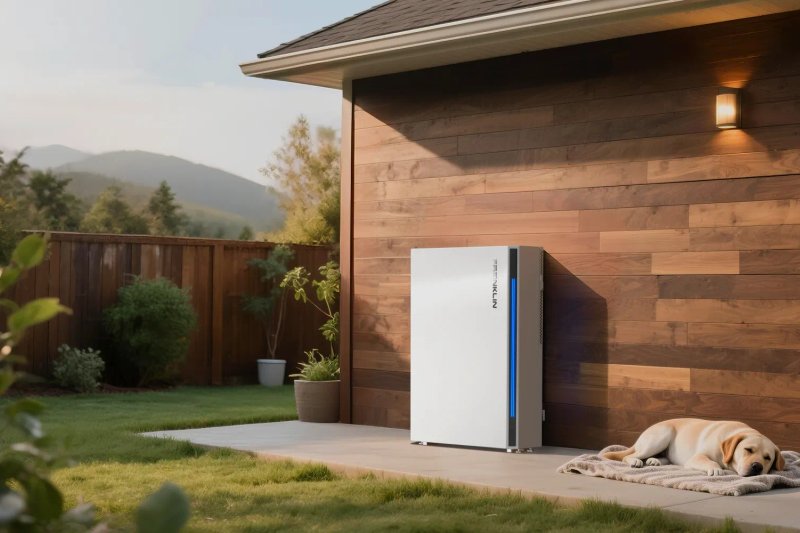
FranklinWH is a US-headquartered company that launched its aPower battery in Australia through a growing installer network. The product has an unusual set of strengths: IP67 waterproofing that no competitor matches, a 12-year warranty that only FoxESS CQ6 ties, and 5kW continuous output from an AC-coupled system that works with any existing inverter.
The V2H marketing is the loudest claim and the most important clarification to make: as of early 2026, what’s available in Australia is V2L, not V2H. They are different products solving different problems.
IP67: the waterproofing advantage
Every residential battery on the Australian market at IP55 or IP65 is rated for dust and water jets. The FranklinWH aPower at IP67 goes further - temporary immersion to 1 metre for 30 minutes.
The practical implications are larger than they first appear:
- Tropical north Queensland and NT: monsoon season brings intense rainfall, flooding, and ground saturation. Standard IP55 batteries mounted close to ground level in these areas face moisture ingress risks that IP67 eliminates.
- Perth and Adelaide: coastal installations with salt spray and occasional storm surge risk.
- Rural properties: batteries in outbuildings, water pump sheds, or agricultural structures where exposure to water is routine rather than exceptional.
For most urban Australian households in sheltered garage locations, IP55 is sufficient. For the segment where weather exposure is a real installation risk, IP67 is a genuine differentiator.
The V2H situation explained
FranklinWH advertises the aGate as “V2H ready” and this language has appeared broadly in Australian solar industry marketing. The honest breakdown:
What the aGate supports today is a generator port - you can connect a vehicle’s V2L output (a cable from the car that provides AC power like a generator) into the aGate, and the aGate uses that power to supplement home loads. This is useful if your EV supports V2L (some BYD and Hyundai vehicles do), but it’s not seamless V2H.
True V2H requires a bidirectional AC charger connected to the home’s grid connection, allowing power to flow from the EV battery to the home as transparently as power flows from the grid or solar. That requires a compatible bidirectional wallbox (like those being developed by BYD and others), a compatible EV, and regulatory approval of bidirectional charging protocols - none of which are fully resolved in Australia as of early 2026.
If V2H is a significant purchase motivator, wait for this technology to mature in the Australian market before buying specifically for that capability.
12-year warranty: the real-world caveat
The 12-year / 43 MWh throughput warranty is one of the strongest offered on any residential battery in Australia. The throughput limit is generous - at typical residential cycling rates, the 43 MWh limit and the 12-year time limit align.
The connectivity requirement is the critical clause: the aPower must remain internet-connected throughout the warranty period to maintain full 12-year coverage. An extended disconnection can reduce warranty coverage to 4 years. For households with reliable NBN or cable internet, this is a non-issue. For properties with unreliable connectivity - rural locations, frequent outages - this is a meaningful risk.
True installed cost
The $7,500 battery price is a component cost, not a system cost. The aGate controller required to operate the system is an additional purchase. Electrical installation, including switchboard connection, circuit work, and commissioning, typically runs $3,000–$6,000 for a single-unit system.
Realistic all-in cost for one aPower unit: $10,800–$14,000.
For reference, the Sonnen eco 10 (10kWh, 15yr warranty, AC-coupled) installs at $15,000–$17,000. The FranklinWH aPower (13.6kWh, 12yr warranty, IP67) at $10,800–$14,000 compares well on a feature-adjusted basis.
Who should buy the FranklinWH aPower
The aPower is best suited to buyers who need IP67 waterproofing for genuine weather exposure in the installation location, want a 12-year warranty on an AC-coupled system, and are not specifically buying for V2H capability. It’s also the right choice for households targeting large storage capacity through multi-unit stacking.
Buyers expecting V2H functionality should confirm current Australian availability before purchasing. Buyers comparing on total installed cost should use the $10,800–$14,000 range, not the $7,500 battery component price.