Gridly
Overview
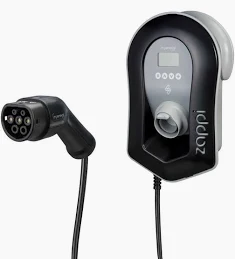
The myenergi Zappi has been the default recommendation for solar EV charging in Australia since its introduction, and that reputation is built on genuine merit: three configurable solar modes, CT-clamp compatibility with any inverter, and a field history across thousands of Australian installations that has worked out the rough edges.
In 2026, the Zappi faces a more competitive landscape than it once did. The Evnex E2 Plus ($1,299) undercuts it by $51 and adds features - OCPP and load management - that the Zappi doesn’t have. That comparison is addressed directly below.
The three solar modes explained
The Zappi’s most significant differentiator is its charging mode granularity:
Fast mode: Ignores solar. Charges at the maximum available current from the grid (up to 32A/7.4kW). Use this when you want the car fully charged quickly regardless of generation.
Eco mode: Monitors solar surplus via the CT clamp. Uses surplus to charge the EV. When solar drops, supplements from grid to maintain a minimum charge rate (user-configurable from 6A/1.4kW upward). Car always charges at some rate while plugged in.
Eco+ mode: Solar only. The charger only activates when surplus generation exceeds the minimum threshold. When solar generation drops below threshold, charging stops and waits. Best for households with large solar systems who want zero grid draw during charging.
This three-mode structure is more configurable than most competitors. The Evnex E2 Plus’s solar mode is CT-clamp-based and works well, but the Zappi’s Eco/Eco+ distinction and the ability to set minimum boost current thresholds gives finer control for users who want to optimise solar self-consumption precisely.
CT clamp: inverter-agnostic solar integration
The CT clamp is fitted to the main supply conductors inside the switchboard. It reads total home power flow - import and export - in real time. The Zappi uses this data to determine how much surplus solar is available and adjusts charge rate accordingly.
This approach works with:
- SolarEdge (including SolarEdge with battery storage)
- Fronius (Symo, Primo, Gen24)
- Sungrow
- GoodWe
- Enphase microinverters
- Any other grid-connect solar system
No inverter API access is required. No special configuration beyond CT clamp installation. The independence from inverter-specific APIs means future inverter changes or software updates don’t affect the Zappi’s solar functionality.
6.5m cable
The 6.5m tethered Type 2 cable is the longest standard cable in the solar charger category. For comparison: the Evnex E2 Plus has 6m, the Wallbox Pulsar Plus 7kW has 5m. The additional 0.5m over the E2 Plus is marginal; the additional 1.5m over the Pulsar Plus is meaningful for longer garage runs.
Zappi vs Evnex E2 Plus: the direct comparison
| Zappi v2.1 7kW | Evnex E2 Plus | |
|---|---|---|
| Price | $1,350 | $1,299 |
| Solar integration | Yes (Eco/Eco+ modes) | Yes (CT clamp, app modes) |
| OCPP | No | Yes (closed 1.6) |
| Load management | No | Yes |
| Cable | 6.5m tethered | 6m tethered |
| Warranty | 3yr | 4yr |
| IP | IP65 | IP55 |
| Australian field history | Established | 2025– |
The E2 Plus wins on OCPP, load management, warranty length, and price. The Zappi wins on solar mode granularity, IP rating (IP65 vs IP55), established Australian track record, and myenergi ecosystem compatibility.
For new buyers with no ecosystem lock-in: the E2 Plus offers more features at a lower price. For buyers specifically wanting the most proven solar implementation, or who plan to add myenergi’s Eddi hot water diverter or Libbi battery, the Zappi is the right platform to build on.
myenergi ecosystem
The Zappi integrates natively with other myenergi products:
- Eddi: Hot water diverter that sends surplus solar to an immersion heater or heat pump - if you have solar + EV + hot water, the Zappi + Eddi combination maximises self-consumption across both loads
- Libbi: myenergi’s home battery storage product - coordinates charging across the battery and EV charger to minimise grid draw
This ecosystem integration is a genuine differentiator for households planning a whole-home energy management system around myenergi. If that’s the goal, the Zappi is the anchor product.
Who should buy the Zappi v2.1 7kW
Best for:
- Solar households who want the most field-tested solar EV charger in Australia
- Buyers who specifically want Eco/Eco+ mode granularity and minimum boost current control
- Households planning to add myenergi Eddi or Libbi and want native integration
- Installations in exposed outdoor locations (IP65 over E2 Plus’s IP55)
Skip if:
- OCPP is required - the Zappi doesn’t have it; choose the E2 Plus or Wallbox Pulsar Plus
- Load management is needed - the Zappi lacks dedicated load management
- Budget is tight - the E2 Plus is $51 cheaper with more features
- Three-phase supply available and faster charging wanted - the Zappi 22kW is the step up