Gridly
Overview
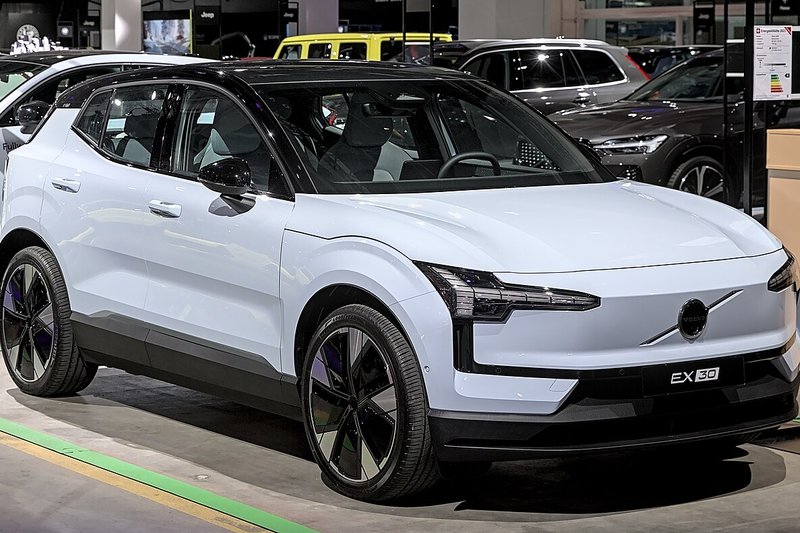
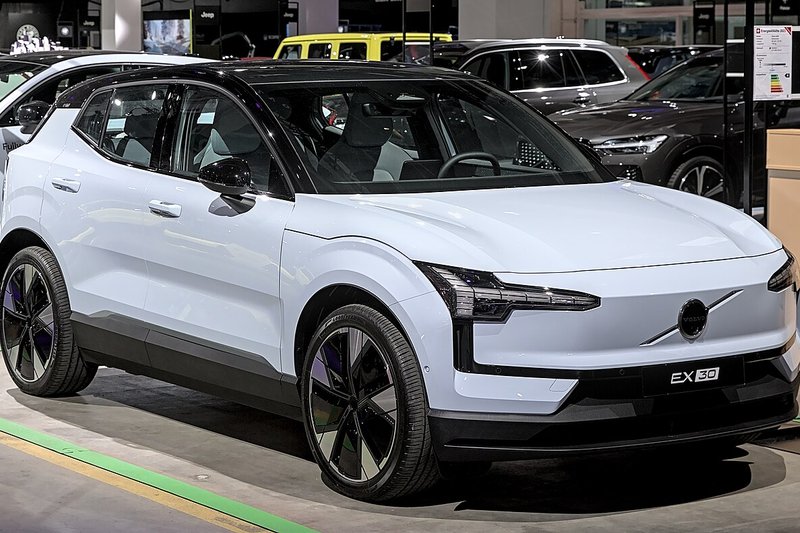
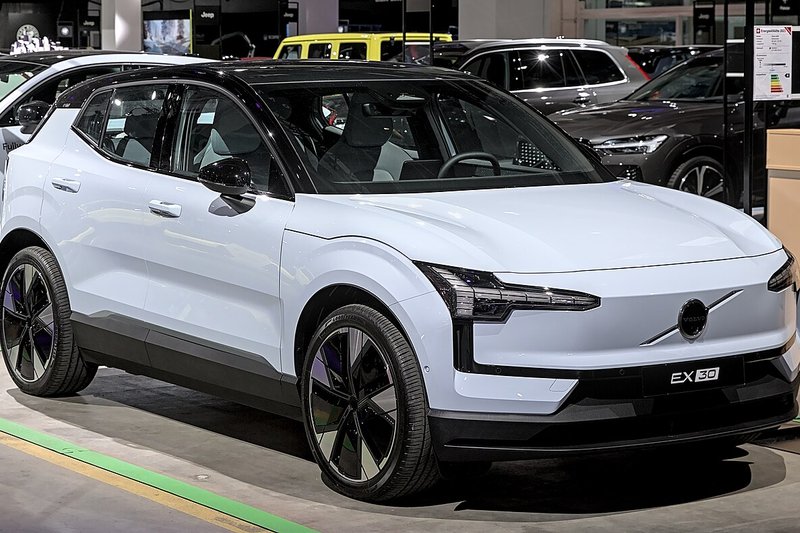
The EX30 Twin Motor Ultra applies Volvo’s record-book acceleration to a compact premium EV: 3.6 seconds to 100 km/h in a car smaller than a Hyundai i30. The dual-motor AWD configuration produces 315 kW combined system output - an extraordinary figure for a small SUV, and a performance level that exceeds most sports cars of a decade ago.
The larger 51 kWh battery (per vehicle data, though the stub mentioned 69 kWh - the JSON shows 51 kWh for twin motor) provides 385 km WLTP (per vehicle data). The dual-motor AWD system delivers confident traction in all conditions, and the performance credentials are the reason to choose this variant over the single-motor options.
The Twin Motor Ultra comes fully equipped - there is no lower-specification twin motor available. Harman Kardon audio, panoramic roof, advanced ADAS, and the complete Volvo technology suite are all standard.
Pricing & Variants
| Variant | Battery | WLTP Range | Drive | 0-100 | Price |
|---|---|---|---|---|---|
| EX30 Plus | 51 kWh | ~400 km | RWD | ~5.7s | ~$59,990 |
| EX30 Ultra | 51 kWh | ~450 km | RWD | ~5.7s | ~$66,290 |
| EX30 Twin Motor Ultra | 51 kWh | ~385 km | AWD | 3.6s | ~$71,290 |
Performance
Dual motor AWD. Combined output: 315 kW. 0-100 km/h: 3.6 seconds - Volvo’s fastest ever production vehicle. Top speed: 180 km/h (per vehicle data). The performance is delivered in a compact body that weighs under 1,800 kg, making the power-to-weight ratio exceptional for the class.
The AWD system distributes torque continuously between front and rear motors. Under hard acceleration, the rear motor dominates for a rear-biased, sporty feel. The chassis is tuned for performance - the suspension is stiffer than in the single-motor variants, which improves handling precision at the cost of some urban ride comfort.
Range and Charging
WLTP range: 385 km (per vehicle data). Real-world highway range at 110 km/h: approximately 310–340 km. Urban and mixed driving: 340–370 km. The AWD system and additional motor weight reduce range compared to the single-motor variants - buyers who prioritise range over performance should choose the Ultra.
DC fast charging: 134 kW (per vehicle data). 10–80%: approximately 26–30 minutes. AC: 11 kW three-phase. Full charge from 11 kW AC: approximately 5.5 hours.
Running cost at $0.30/kWh: (51 / 385) × 100 × 0.30 = $3.97/100 km.
Interior and Technology
Full Ultra specification standard: Harman Kardon 1,040-watt audio system with 17 speakers - exceptional for a compact EV. Panoramic fixed glass roof. Enhanced ambient lighting system with multiple colour zones. Complete driver assistance suite.
The EX30’s interior concentrates all vehicle controls in a single 12.3-inch Google Automotive display - a design that is either elegant minimalism or frustrating depending on the driver. Climate, seat heating, and mirror adjustment all require screen interaction. Google Maps, Google Assistant, and over-the-air updates are native.
The physical space is genuinely compact: two front seats are generous; two rear seats accommodate adults for short to medium trips. A third rear passenger is uncomfortable.
Practicality
Five seats. Boot: approximately 318 L - constrained by the compact body. Towing: 1,600 kg braked (per vehicle data) - useful for a small trailer or jetski. V2L: not available. V2H: not available.
The compact dimensions make the EX30 exceptionally easy to park in dense urban environments: length under 4.3 metres is car-park friendly.
Safety
Five-star Euro NCAP with strong subcategory scores. Standard safety across all EX30 variants: City Safety with pedestrian and cyclist detection, Pilot Assist (combined adaptive cruise and lane centring), Run-off Road Protection, Oncoming Lane Mitigation, Safe Exit Warning. The Twin Motor Ultra adds additional ADAS features as part of the full Ultra specification.
Running Costs and Ownership
Running cost: approximately $3.97/100 km at $0.30/kWh. Warranty: 5 years / unlimited km (per vehicle data). Volvo’s Australian dealer network is metropolitan-focused but covers all major cities comprehensively. Service through authorised Volvo dealers with EV-trained technicians.
Verdict
The Twin Motor Ultra is for performance EV buyers who want a compact, premium body and are prepared to accept the range trade-off that comes with dual motors in a small battery. The 3.6-second 0-100 time in a Volvo safety-rated compact body is genuinely remarkable. The 134 kW DC charging and 385 km WLTP are the practical limitations.
For buyers choosing between the EX30 Twin Motor and the Hyundai Ioniq 5 N Line AWD, the decision comes down to size preference: the EX30 is dramatically more compact, easier to park, and cheaper. The Ioniq 5 offers more range, faster charging, V2L, and a better warranty.
Frequently Asked Questions
How does the EX30 Twin Motor compare to the Ioniq 5 N Line AWD?
The Ioniq 5 N Line AWD (~$79,900) has more WLTP range, 350 kW DC charging, V2L, and a five-year unlimited warranty. The EX30 Twin Motor is $8,600 cheaper with a faster 0-100 (3.6s vs 5.1s), but less range (385 vs ~548 km), slower DC charging, no V2L, and a compact interior. If compactness and performance per dollar are the priority, the EX30 wins.
Why is the EX30 Twin Motor’s range less than the single-motor Ultra?
The dual-motor system adds weight and drivetrain losses that the 51 kWh battery must overcome. The Ultra achieves 450 km on the same battery from a lighter, more efficient single-motor setup. The 65 km range reduction is the cost of the AWD performance upgrade.
Is the Harman Kardon audio worth the upgrade to Twin Motor Ultra?
The Harman Kardon system in the EX30 is exceptional - 1,040 watts across 17 speakers in a compact cabin produces a sound quality well above the vehicle’s size and price class. If audio quality matters to you, the Ultra’s standard inclusion of this system is a strong argument for the trim level.