Gridly
Overview
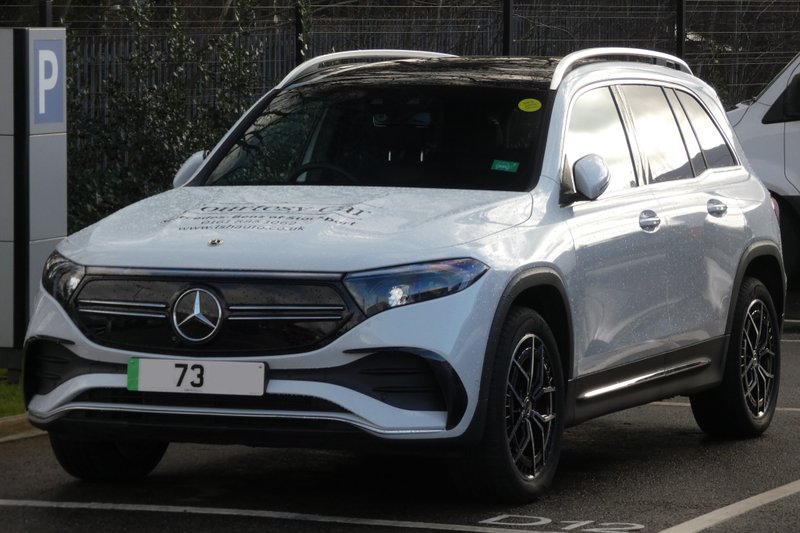
The EQB 250 takes the EQA’s fundamental package and extends it into a longer body with an optional third row - creating a seven-seat compact electric SUV where the only EV alternatives requiring three rows are substantially larger and more expensive. The Kia EV9 ($100,100+) and Hyundai IONIQ 7 offer genuine three-row EV capability at higher prices and in larger bodies; the EQB offers the same seat count in a much smaller, more affordable package.
The compact-seven-seat format is a specific brief. Families who need occasional extra seating capacity without the commitment to a large SUV - the school carpool that needs seven seats three times a week, the family with a grandparent who occasionally rides in the third row - will find the EQB’s proportions more practical than a Kia EV9 in a tight urban environment.
At $89,000, the EQB 250 is the only premium compact seven-seat EV in Australia. That specificity justifies its existence despite the 100kW DC charging limitation it carries from the EQA-derived platform.
Pricing & Variants
| Variant | Battery | Range | Seats | DC Charging | Price |
|---|---|---|---|---|---|
| EQA 250 | 70.5kWh | 560km WLTP | 5 | 100kW | ~$83,000 |
| EQB 250 | 70.5kWh | 536km WLTP | 7 | 100kW | ~$89,000 |
The EQB adds $6,000 over the EQA for the longer body, third row, and additional rear cargo versatility. Range drops slightly from 560km to 536km due to the additional weight and less aerodynamic profile of the longer body.
Performance
The EQB 250 uses a single 140kW front motor with 385Nm. 0-100 km/h takes approximately 8.0 seconds - adequate for the family compact SUV role. Top speed is limited to 160 km/h. The additional weight of the longer body is perceptible compared to the EQA, but the EQB’s character remains refined and composed.
The FWD layout is appropriate for the school run, weekend shopping, and suburban family use that defines most of the EQB’s usage pattern.
Range and Charging
- WLTP range: 536km
- Real-world estimate: 420-450km at mixed urban/highway driving
- DC charging: 100kW (CCS)
- AC charging: 11kW (Type 2)
- 10-80% at 100kW DC: approximately 38-42 minutes
- Full charge at 11kW AC: approximately 7.5 hours
The 536km WLTP range is functional for the family compact SUV brief. Real-world mixed driving returns approximately 420-450km - sufficient for most weekly requirements without requiring a charge stop. The 100kW DC ceiling applies the same highway charging limitation as the EQA. For family road trips where all seven seats are used and charge stops are needed, the 40-minute 10-80% time is workable but slower than Korean alternatives.
Interior and Technology
MBUX runs on dual 10.25-inch screens with the same mature interface as the EQA. “Hey Mercedes” voice control, navigation with charge stop planning, and heated seat controls are standard. Material quality throughout the cabin is Mercedes-premium: soft-touch surfaces, 64-colour ambient lighting, and optional Nappa leather upholstery.
The seven-seat cabin provides two genuine front seats, a full rear bench, and two small rear-facing seats in the third row. The third row is designed for short-trip adult use or regular child use; extended adult travel in the third row is constrained by the compact body dimensions. Folded, the third row creates a flat, practical load floor.
Wireless CarPlay and Android Auto are standard.
Practicality
Seven seats in a compact body - the EQB’s defining practical specification. Boot space with all seven seats in use is limited; with the third row folded, the load floor is flat and practical for family cargo. 750kg towing capacity is available. V2L is not available.
For families who need seven seats regularly rather than occasionally, the EQB is a compromise - the third row is genuinely small. For the occasional extra-seat requirement, it is perfectly practical.
Safety
Five-star ANCAP. Mercedes PRE-SAFE suite with Active Brake Assist (AEB), Lane Keeping Assist, Blind Spot Assist, Active Lane Change Assist, and 360-degree parking camera. The comprehensive safety equipment set is consistent with the EQA’s specification.
Running Costs and Ownership
- Energy cost: (70.5 ÷ 536) × 100 × $0.30 = $3.95/100km at $0.30/kWh
- Warranty: 4 years (confirm current terms)
- Dealer network: Mercedes-Benz Australia’s national dealer network
Running costs are low for the premium compact SUV class. The 4-year warranty is shorter than Korean competitors and is the main ownership consideration for buyers planning longer holding periods. Mercedes-Benz Australia’s established dealer network provides strong service support nationwide.
Verdict
The EQB 250 is for families who need a three-row compact EV and specifically want the Mercedes interior quality and brand experience. The seven-seat specification in a compact premium EV body is genuinely unique in the Australian market - no Korean, European, or Chinese competitor offers exactly this combination at this price.
The 100kW DC charging and 4-year warranty are real limitations. For families who primarily charge at home and use the third row occasionally for school runs or family outings, these limitations are largely invisible in practice. The EQB delivers on its specific brief effectively.
Frequently Asked Questions
Is the EQB third row usable for adults?
The EQB’s third row seats two people in a compact body. Adult passengers will find it tight for legroom and headroom on longer trips - it is best described as suitable for children or short-trip adult use. For families where the third row will carry adults regularly, the Kia EV9’s genuine adult-capable third row is a better option despite its higher price.
Does the EQB come in all-wheel drive?
Yes - the EQB 350 4MATIC offers AWD capability with two motors. This variant is available in some markets but confirm current Australian-specification availability with Mercedes-Benz Australia, as model variants change. The EQB 250 reviewed here is FWD single-motor.
How does the EQB compare to the Kia EV9 for family use?
The Kia EV9 Air ($100,100) provides a larger, genuinely adult-capable third row, 500km+ WLTP range, 233kW DC charging on the 800V architecture, and Kia’s 7-year warranty - at a $11,000 premium over the EQB. The EQB is considerably smaller and easier to park in urban environments. For families who need full adult seating in the third row, the EV9’s capability justifies the additional cost. For families who primarily need a compact body with occasional extra-seat use, the EQB is the more versatile daily vehicle.