Gridly
Overview
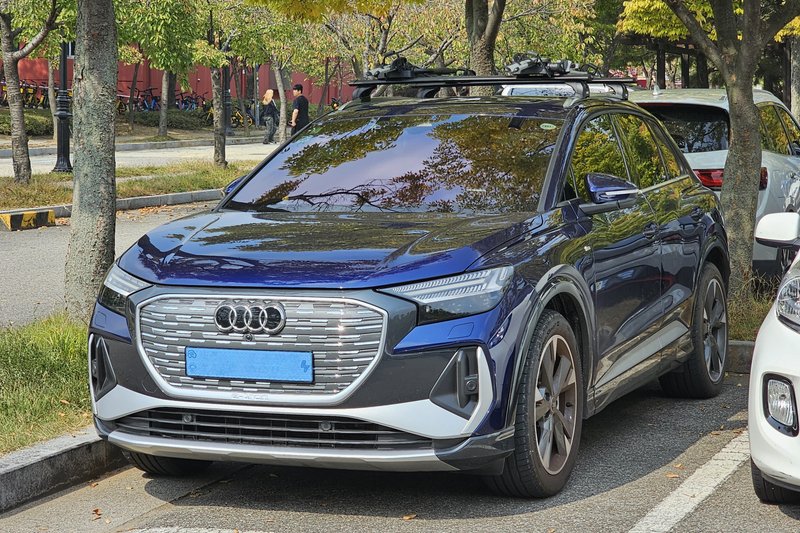
The Audi Q4 55 e-tron quattro is the dual-motor, all-wheel-drive version of Audi’s compact electric SUV. Built on Volkswagen Group’s MEB platform - shared with the VW ID.4, Skoda Enyaq, and CUPRA Born - the Q4 range applies Audi’s interior quality, technology, and quattro AWD credentials to an architecture that was designed for volume rather than ultimate performance.
The 55 quattro designation denotes the AWD configuration within the Q4 range. A front-mounted motor supplements the rear-mounted primary unit, adding roughly 80kW to the system output and enabling quattro’s torque vectoring between axles. The result is 5.4-second 0–100 km/h - significantly sharper than the 45 RWD variant - and the all-weather confidence that Australian buyers associate with quattro.
At $105,900 before on-road costs, the Q4 55 quattro sits in the competitive mid-premium compact EV segment alongside Korean alternatives like the Kia EV6 and Hyundai IONIQ 5. Audi’s proposition is premium brand positioning, superior interior quality, and the Audi dealer network - at a price premium over rivals that offer faster charging and longer warranties.
Pricing & Variants
| Variant | Price (before ORC) | Drive | 0–100 km/h | Range (WLTP) | DC Charge |
|---|---|---|---|---|---|
| Q4 40 e-tron (RWD) | ~$79,900 | RWD | 8.5s | 488km | 175kW |
| Q4 45 e-tron (RWD) | ~$89,900 | RWD | 6.7s | 531km | 175kW |
| Q4 55 e-tron quattro | $105,900 | AWD | 5.4s | 488km | 175kW |
All Q4 variants share the MEB platform with its 400V architecture and 175kW DC charging cap. The performance and AWD upgrade of the 55 quattro comes without any charging speed improvement - a fundamental platform limitation.
Performance
The Q4 55 quattro’s dual-motor system produces a combined 220kW and 460Nm. The front motor adds approximately 80kW to the rear unit and provides the torque split capability that defines quattro AWD. Launch control holds maximum torque from standstill, enabling the 5.4-second result on dry pavement.
The AWD system is primarily electronically managed rather than mechanical - it redistributes torque between axles based on wheel slip, steering angle, and accelerator input. In wet or loose conditions this produces confident traction that the RWD variants cannot match. On sealed roads in good conditions, the AWD adds stability and traction assurance without transforming the driving character into something sharply sporty.
Top speed is electronically limited to 180 km/h. The ride quality on the standard suspension (sport suspension optional) is well-suited to Australian roads - compliant without being floaty, and with less of the firmness that characterises some MEB-platform variants from other VW Group brands.
Range and Charging
WLTP range is 488km from the 82kWh battery. Real-world range in mixed Australian conditions will typically fall between 370–430km depending on speed and climate. The dual-motor configuration adds modest efficiency losses compared to the RWD 45 - the WLTP result accounts for this, with the 55 quattro rated around 43km below the 45 RWD.
DC fast charging peaks at 175kW - the ceiling of the MEB platform’s 400V architecture, regardless of variant. At a 175kW or higher capable charger, the 10–80% charge (approximately 49kWh from 8kWh to 66kWh) takes approximately 26–28 minutes. This is respectable but trails Korean platform competitors: the Kia EV6 and Hyundai IONIQ 6 both charge at 240kW on their 800V E-GMP platform.
AC charging via the standard 11kW three-phase onboard charger takes approximately 8.5 hours from empty using a compatible three-phase wallbox. No V2L or V2H capability.
Interior and Technology
The Q4’s interior is where Audi justifies its price premium over sibling MEB-platform vehicles. The dashboard uses premium materials throughout - soft-touch plastics, aluminium-finished controls, and well-damped switchgear that feels distinctly above the ID.4 and Enyaq. The driver-focused cockpit places the 10.1-inch MMI infotainment display within natural sightline.
Wireless Apple CarPlay and Android Auto are standard. Audi’s augmented-reality head-up display - standard on the 55 quattro - projects navigation directions onto the windscreen at the correct apparent distance, creating a remarkably natural navigation experience. The 12.3-inch digital instrument cluster is configurable and supports Audi’s virtual cockpit layouts.
The rear-seat space is generous for the class, with 520 litres of boot capacity and a relatively flat floor enabled by the MEB platform’s underfloor battery placement.
Practicality
The Q4 55 quattro offers five seats with reasonable rear legroom for a compact SUV. Boot volume is 520 litres with the rear seats up - competitive for the segment. There is no frunk; the front motor occupies the traditional storage area.
Towing capacity is 1,200kg braked - useful for light trailers and small boat trailers, though below the 1,800kg tow rating of the Q6 e-tron. Roof rails are available for additional load capacity. The flat underfloor battery layout provides a low loading lip and practical floor-level boot.
No V2L or V2H. The MEB platform does not currently support vehicle-to-load functionality on any Audi variant.
Safety
The Q4 e-tron range holds a 5-star Euro NCAP rating. Standard active safety equipment on the 55 quattro includes:
- Audi pre-sense front (automatic emergency braking with pedestrian detection)
- Adaptive Cruise Assist with lane centring
- Side Assist blind-spot monitoring
- Rear cross-traffic alert
- Lane departure warning
The Audi Driver Assistance Package (optional) adds Predictive Efficiency Assist, which uses navigation data to pre-condition braking for corners and speed limits. This is particularly useful on unfamiliar routes and contributes to real-world range improvement.
Running Costs and Ownership
At $0.30/kWh, the Q4 55 quattro costs approximately $5.04 per 100km in electricity (82kWh ÷ 488km × 100 × $0.30). On a favourable off-peak home tariff of $0.15/kWh, this falls to approximately $2.52 per 100km - competitive with a frugal petrol small car at current fuel prices.
Audi Australia’s standard warranty is 3 years with no stated kilometre cap. Battery warranty is 8 years / 160,000km. This compares unfavourably to Kia (7 years / 150,000km vehicle, 7 years / 150,000km battery) and Hyundai (5 years / unlimited km, 8 years / 160,000km battery), both offering longer vehicle warranty terms at lower prices.
Audi’s Australian dealer and service network is well-established in all metropolitan and many regional areas. The shared MEB platform with other VW Group vehicles means technician familiarity is high and parts supply is reliable.
Verdict
The Q4 55 e-tron quattro is the right choice within the Q4 range for buyers who value AWD traction and want the quickest Q4. The 5.4-second 0–100 time and quattro AWD system genuinely differentiate it from the RWD variants, and the interior quality remains the Q4’s strongest asset versus Korean competitors.
The limitations are honest ones. The 175kW DC charging cap is a platform constraint that no variant can overcome, and the three-year warranty is a persistent gap versus the Korean alternatives. Buyers choosing the Q4 55 quattro over an EV6 AWD or IONIQ 5 AWD are making a deliberate choice to pay for Audi’s premium interior, brand experience, and dealer network - not for technical leadership. That is a valid choice; it should be made consciously.
Frequently Asked Questions
How does the Q4 55 e-tron quattro compare to the Kia EV6 GT-Line AWD?
The EV6 GT-Line AWD charges faster (240kW vs 175kW), has a longer warranty (7 years vs 3 years), offers V2L functionality, and costs less. The Q4 55 quattro offers a better interior, Audi’s AR head-up display, and the traditional premium brand experience. The EV6 is the more technically capable choice; the Q4 is the premium brand choice.
What is the real-world range of the Q4 55 e-tron quattro in Australia?
Expect 370–430km in mixed urban and highway conditions. At a constant 110 km/h, range drops to approximately 340–370km. In urban stop-start driving with regenerative braking, you may exceed 430km. The 488km WLTP figure is achievable under optimal conditions but should not be treated as a planning number for long-distance travel.
Does the Q4 55 e-tron quattro support three-phase AC charging?
Yes. The standard 11kW three-phase onboard charger is included. A compatible three-phase wallbox (Type 2, 32A three-phase) is required to charge at full 11kW speed. On a standard single-phase 7.4kW circuit, charging time from empty extends to approximately 12.5 hours.