Gridly

Overview
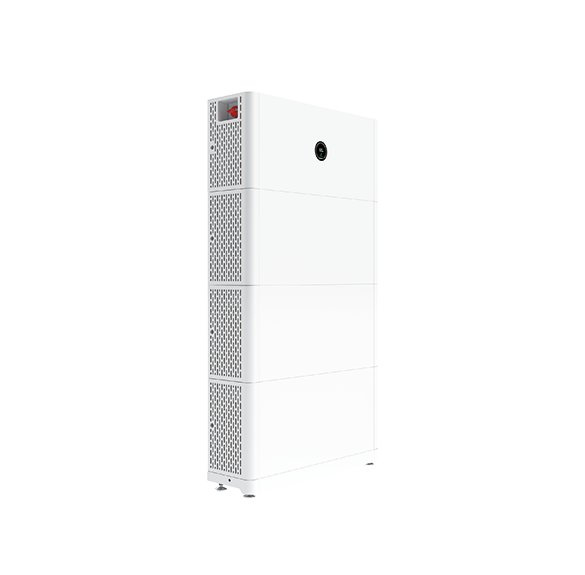
The SolarEdge Home Battery occupies a narrow but real market: homeowners with SolarEdge StorEdge or Energy Hub inverters who want to add storage at the lowest possible cost. In that context, $4,500 for 10kWh of LFP storage with native integration and IP66 outdoor rating is a genuinely compelling offer. Outside that context, the SolarEdge ecosystem lock-in makes the battery irrelevant.
SolarEdge has a significant installed base in Australia - the company’s power optimiser + inverter architecture is well-regarded, and many homes installed from 2018 onwards run SolarEdge systems. For those homeowners, the storage decision often reduces to whether to stay within the SolarEdge ecosystem or specify a third-party battery compatible with their inverter (the BYD HVM 16.6 supports SolarEdge StorEdge).
The value case
$4,500 for 10kWh of usable LFP storage is the best $/kWh figure available in the Australian market for a certified residential battery. The BYD HVM 16.6 at $8,500 for 16.6kWh is $512/kWh. The SolarEdge unit at $4,500 for 10kWh is $450/kWh. For a buyer who needs 10kWh and has a SolarEdge inverter, the economics are straightforward.
The total installed cost for an existing SolarEdge customer adding a Home Battery typically lands at $6,000–$7,500, which is well below the typical $10,000–$16,000 all-in cost for competing 10kWh systems. The combination of the existing inverter amortised over the solar system and the low battery supply price makes this the most accessible storage entry point in the market for eligible customers.
IP66 outdoor rating
Most home batteries in Australia are IP55 rated - protected against low-pressure water jets but not rain immersion or sustained water exposure. IP66 (the SolarEdge rating) adds protection against high-pressure water jets and more severe weather exposure. The practical implication is that the SolarEdge battery can be mounted in a fully exposed outdoor location - on an exterior wall with no eave, for instance - without requiring additional weatherproofing.
For Australian homes without a suitable internal wall or sheltered garage space for battery mounting, IP66 meaningfully expands installation options. A battery that can go on the south-facing exterior wall of the house is easier to cable to the switchboard than one requiring a dedicated indoor spot.
Efficiency and output
94% round-trip efficiency is good. It’s not the 96–97% of the Sungrow SBR range, but it’s meaningfully better than the Powerwall 3’s 89% and comparable to the BYD HVM. For daily cycling, the efficiency figure determines how much of your solar generation is returned as usable household electricity - 94% means 94 cents back per dollar put in.
5kW continuous output supports essential load backup: a refrigerator, LED lighting, router, and device charging will sit comfortably within 5kW. Running a reverse-cycle split system simultaneously is feasible (most residential split systems draw 1–3kW). Running ducted air conditioning, an electric oven, or a washing machine plus the other loads simultaneously will approach or exceed 5kW - at which point the system needs to shed load or the backup circuit needs to be limited to lower-draw equipment.
The warranty problem
2 years. Every other home battery in the Australian market at this capacity tier offers at least 10 years. The Enphase IQ Battery 5P offers 15. Fronius, BYD, Sungrow, and Tesla all offer 10.
A 2-year warranty on an asset expected to operate daily for 15–20 years is a genuine concern. The LFP chemistry is durable - the cells themselves are unlikely to fail in years 2–5 under normal operating conditions. But the broader system, including the battery management electronics and communication hardware, could experience issues in that window. If they do after year 2, it’s out-of-pocket.
SolarEdge’s established Australian service network provides some comfort. But warranty is the single most significant trade-off buyers are making when they choose the SolarEdge battery over alternatives with 10-year coverage.
Comparison within the SolarEdge ecosystem
The main alternative for SolarEdge inverter owners is the BYD HVM 16.6, which is compatible with SolarEdge StorEdge:
| SolarEdge Home Battery 10 | BYD HVM 16.6 (with SolarEdge) | |
|---|---|---|
| Usable capacity | 9.7–10kWh | 16.6kWh |
| Supply price | ~$4,500 | ~$8,500 |
| Warranty | 2 years | 10 years |
| Scalable | No | To 66kWh |
| Round-trip efficiency | 94% | 96% |
| IP rating | IP66 | IP55 |
The BYD adds 6.6kWh, 2% efficiency, scalability, and 8 years of additional warranty for approximately $4,000 more at supply. Whether that premium is justified depends on how much value you place on the additional capacity and warranty. For the buyer who specifically wants entry-level storage at minimal cost, the SolarEdge unit is the right answer. For the buyer optimising for long-term value, the BYD is the better investment.
Who should buy the SolarEdge Home Battery 10kWh
This battery is for SolarEdge inverter owners who want to add storage at the lowest cost, are comfortable with the 2-year warranty trade-off, and have 10kWh as their storage target. It is not for buyers evaluating a new system from scratch (the warranty alone makes it a secondary recommendation), and it is not for anyone wanting to expand beyond 10kWh within the same battery system.
For the specific customer it serves, the SolarEdge Home Battery 10kWh is the most cost-effective path to home energy storage in Australia.