Gridly
Overview
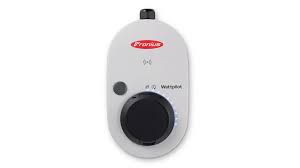
The Fronius Wattpilot Home 22J sits at the intersection of three requirements that are rarely combined in a single residential charger: 22kW three-phase output, solar surplus integration, and OCPP. At $1,800, it’s expensive. For the specific household it’s designed for - three-phase supply, Fronius solar, wanting maximum charge speed with solar awareness - it is the clear choice.
For households without three-phase supply or without a strong interest in solar EV integration, cheaper and simpler options serve better.
Why 22kW matters in a home charger
Most Australian homes have single-phase supply, limiting any home charger to 7.4kW regardless of nameplate rating. Three-phase supply is available in:
- New housing estates (many developers now install three-phase)
- Properties with large solar systems or commercial-grade HVAC
- Regional properties
- Older homes in some states where three-phase is common
On three-phase supply, a Tesla Model 3/Y or Hyundai IONIQ 5 charges at 11kW (limited by the vehicle’s OBC). This adds approximately 540km of range over an 8-hour overnight charge versus 370km on single-phase 7.4kW. For households that rely on their EV as a primary vehicle and park overnight, the difference is meaningful for very high-mileage days.
Fronius Solar.web integration
The deepest value in the Wattpilot is its native Fronius ecosystem integration. When paired with a Fronius Gen24 or Symo inverter:
- Live solar generation, battery state, and grid flow are read directly from the inverter via the Fronius API
- The Wattpilot adjusts charge rate with more precision than CT clamp-only systems - it knows exactly how much solar is available without estimation latency
- All data appears in the Fronius Solar.web app alongside inverter and battery data - unified energy management in one platform
For Fronius households, this integration eliminates the need for a separate solar EV charger app and provides tighter coordination between the EV charger and the home energy system.
For non-Fronius households, the Wattpilot falls back to CT clamp integration, which still works but foregoes the native API advantage.
OCPP and load management
The Wattpilot’s OCPP implementation allows connection to any OCPP backend - Home Assistant, third-party CPMS, or fleet management software. Combined with load management (CT clamp switchboard monitoring), it provides the full smart charging feature set needed for complex home energy scenarios.
The socket-only limitation
Fronius chose socket-over-tethered for flexibility - but the practical implication is that every user needs a separate Type 2 Mode 3 cable. A good 6m cable costs $80–$120. Most Wattpilot buyers clip the cable to the charger wall mount and leave it semi-permanently, which approximates a tethered setup - but the cable is technically detachable, which creates the risk of it being misplaced or stolen.
Who should buy the Fronius Wattpilot Home 22J
Best for:
- Households with Fronius inverters (Gen24 or Symo) wanting native solar integration at 22kW
- Three-phase properties wanting maximum AC charge speed with OCPP and solar awareness
- Buyers who want OCPP, solar integration, and load management in a 22kW unit
Skip if:
- Single-phase supply - 22kW capability is irrelevant, and cheaper options (Zappi 7kW, Evnex E2 Plus) are better value
- Non-Fronius inverter - the native integration advantage disappears, and the Sigenergy 22kW ($1,400) or Zappi 22kW ($1,645) are comparable options at lower cost
- Tethered cable preference - the socket-only design requires a separate cable
Read our full Fronius Wattpilot Home 22J review for detailed comparisons with the Zappi, Wallbox Pulsar Plus, and Evnex E2.