Gridly
Overview
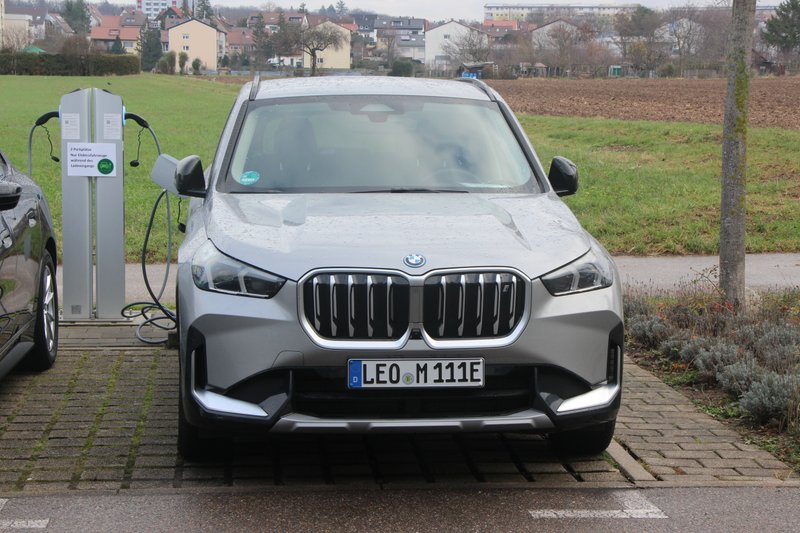
The BMW iX3 is BMW’s mid-size electric SUV - built on the X3 body architecture with a fully electric drivetrain in place of the petrol and diesel options. It occupies the segment between the compact iX1 and the larger premium iX, offering X3 family SUV practicality, a 460 km WLTP range, and the 200 kW DC charging capability that separates it from the iX1’s 130 kW ceiling.
The iX3 is the EV that BMW family SUV buyers migrate to most naturally: same proportions, same boot volume, same rear legroom, same iDrive interface, but with an electric powertrain that reduces running costs and eliminates combustion service requirements. M Sport specification - including M Sport bodywork, 20-inch alloy wheels, and M Sport brakes - is standard on all Australian iX3 models.
A single rear motor producing 210 kW drives the rear wheels through a single-speed reduction gear. This rear-wheel drive layout gives the iX3 a driving character that most competitors in the segment - with front-wheel or all-wheel drive - do not replicate. At $105,000, the iX3 is priced above the iX1 xDrive30 and below the entry iX xDrive40, providing a clear step in size and range within BMW’s EV SUV range.
Pricing & Variants
| Variant | Drive | Battery | Range | 0–100 | Price (AUD) |
|---|---|---|---|---|---|
| iX1 xDrive30 | AWD | 67 kWh | 440 km | 5.6 s | $84,900 |
| iX3 Standard | RWD | 80 kWh | 460 km | 6.8 s | $105,000 |
| iX xDrive40 | AWD | 76 kWh | 425 km | 6.1 s | $130,900 |
The iX3 sits clearly between the iX1 and the large iX in BMW’s SUV EV hierarchy. The larger 80 kWh battery and 200 kW DC charging capability (versus 130 kW for the iX1) are the primary specification upgrades over the iX1. The iX3’s rear-wheel drive layout is unusual in the segment - it delivers BMW character but foregoes AWD traction in wet conditions.
Performance
The single rear motor produces 210 kW and 400 Nm. The 0–100 km/h time is 6.8 seconds - moderate for an electric SUV of this price but appropriate for the iX3’s family SUV brief. Top speed is limited to 180 km/h. The rear-wheel drive layout is distinctive in the mid-size premium EV SUV segment, where most competitors use front-wheel or all-wheel drive systems.
The M Sport suspension specification is standard in Australia, providing M Sport spring and damper rates that balance ride comfort and body control more assertively than the base X3 suspension geometry would suggest. On smooth highways the iX3 is composed and refined; on rougher suburban surfaces the M Sport tuning is firmer than the iX range’s air suspension but well-calibrated for Australian road conditions. The rear-drive balance communicates grip state more clearly than AWD alternatives in equivalent conditions.
Range and Charging
The 80 kWh battery (approximately 77 kWh usable) delivers 460 km WLTP. Real-world highway range at 110 km/h is approximately 360–400 km in mild conditions - suitable for metropolitan daily use and regional trips with planned charging stops on longer routes. Sydney–Wollongong, Melbourne–Ballarat, and Brisbane–Sunshine Coast routes can be completed without charging; Perth–Mandurah and longer regional drives require a charge stop.
DC fast charging peaks at 150 kW on CCS2. A 10–80% charge covers approximately 54 kWh and takes approximately 26 minutes at peak speed - a good result for the battery size. AC charging is 11 kW three-phase, with a full charge taking approximately 8 hours overnight. The 150 kW DC peak is between the iX1’s 130 kW and the larger iX’s 200 kW; it is practical for most highway charging scenarios but lags the 250–350 kW peaks of 800V Korean platforms.
Interior and Technology
The iX3 interior uses the X3 body architecture with BMW’s EV-specific instrument and display treatment. The curved iDrive display unit - 12.3-inch instruments and 14.9-inch touchscreen in a single flowing panel - replaces the previous-generation instrument cluster and is responsive throughout. iDrive 8 organises vehicle functions logically and responds quickly to touch inputs.
Standard Australian specification includes heated front seats, a panoramic glass roof, wireless CarPlay and Android Auto, a Harman Kardon sound system, a full-colour head-up display, and BMW’s Driving Assistant Professional ADAS suite. The M Sport interior specification adds M Sport seats, an M Sport leather steering wheel, and M-specific ambient lighting. Materials quality is consistent with BMW’s premium positioning - soft-touch surfaces on all primary contact points, high-quality synthetic leather as standard.
Practicality
Five seats with X3-class rear legroom - the iX3 provides genuinely comfortable rear accommodation for adults, a strength over the iX1’s more compact rear quarters. Boot volume is 510 litres with a flat load floor enabled by the under-floor battery packaging. This matches the combustion X3’s boot volume and is a key advantage of the EV’s packaging efficiency.
Towing capacity is rated at 750 kg - the same as the iX1 and a limitation versus the iX range’s 2,500 kg. The iX3 is not suited to heavy caravan or boat trailer towing; buyers who need meaningful towing capacity should consider the i5 eDrive40 or the iX range. V2L and V2H are not available.
Safety
BMW’s Driving Assistant Professional is standard on Australian iX3 models, providing the complete active safety suite: adaptive cruise control with lane-centring, forward collision warning with autonomous emergency braking, blind spot monitoring, rear cross-traffic alert, pedestrian and cyclist detection, traffic jam assist, and speed limit recognition.
Parking Assistant with a rear reversing camera is standard; a 360-degree surround-view camera system is available as an option for urban manoeuvring. The iX3 carries over the X3’s underlying structural safety architecture. BMW’s iX3 has not been separately rated by ANCAP under current protocols, though the X3 platform foundation provides the structural basis for the active safety systems.
Running Costs and Ownership
At $0.30 per kWh, the iX3 costs approximately $5.22 per 100 km on home charging - calculated as (80 ÷ 460) × 100 × 0.30. This compares favourably with a petrol X3 xDrive20i at approximately $17–19 per 100 km, with annual savings of approximately $3,000–3,500 for typical Australian driving distances of 15,000–20,000 km per year.
BMW Australia’s three-year warranty applies with no stated kilometre limit. The iX3 is serviced through BMW’s existing dealer network, with the X3-derived platform meaning parts availability is well-established alongside the broader X3 service base. BMW’s Condition Based Servicing schedule reduces routine service frequency versus combustion vehicles; the absence of oil changes and reduced brake wear contribute to lower per-kilometre maintenance costs.
Verdict
The BMW iX3 is the choice for buyers who want X3 family SUV practicality in an EV format, with BMW’s rear-wheel drive character and driving dynamics as the key differentiator. The 460 km WLTP range is competitive, the 150 kW DC charging is practical, and the 510-litre boot makes it genuinely useful as a primary family vehicle. M Sport specification as standard adds visual and dynamic appeal without additional cost.
The shortcomings are consistent across the BMW EV range: a three-year warranty, no V2L, and DC charging that trails the 800V Korean competition. The Hyundai IONIQ 5 and Kia EV6 offer more charging speed, longer warranties, and V2L capability at lower prices. The iX3 is the choice for buyers who specifically want the BMW X3 experience in an EV - the driving dynamics, the brand identity, and the premium interior - and for whom those qualities justify the premium over Korean alternatives.
Frequently Asked Questions
Why is the BMW iX3 rear-wheel drive when most electric SUVs are AWD?
BMW deliberately chose rear-wheel drive for the iX3 to maintain the brand’s characteristic driving balance and rear-drive handling dynamics. A rear-wheel drive layout places more of the driving load on the rear axle, giving the car the same steering precision and cornering behaviour that defines BMW’s combustion SUVs. Buyers who need AWD traction in wet conditions should consider the iX1 xDrive30 or iX xDrive40.
How does the iX3 compare to the Hyundai IONIQ 5 AWD?
The IONIQ 5 AWD is approximately $30,000 cheaper, offers 800V charging up to 350 kW, a 5-year warranty, V2L capability, and AWD traction. The iX3 responds with BMW’s rear-drive dynamics, a more premium interior quality, M Sport specification as standard, and the BMW brand experience. The IONIQ 5 is the specification-value leader; the iX3 is the BMW choice.
Is the BMW iX3 a good family car for Australian conditions?
Yes, for most Australian families. The 510-litre boot handles prams, school bags, and shopping comfortably. Five seats with adult-friendly rear legroom suit families of four or five. The 460 km WLTP range covers daily commuting, school runs, and weekend trips without anxiety. For families making regular long-distance highway trips, the 150 kW DC charging provides practical highway stops of approximately 25–30 minutes for a meaningful charge.